Collector Guide: Bringing Your Art Home
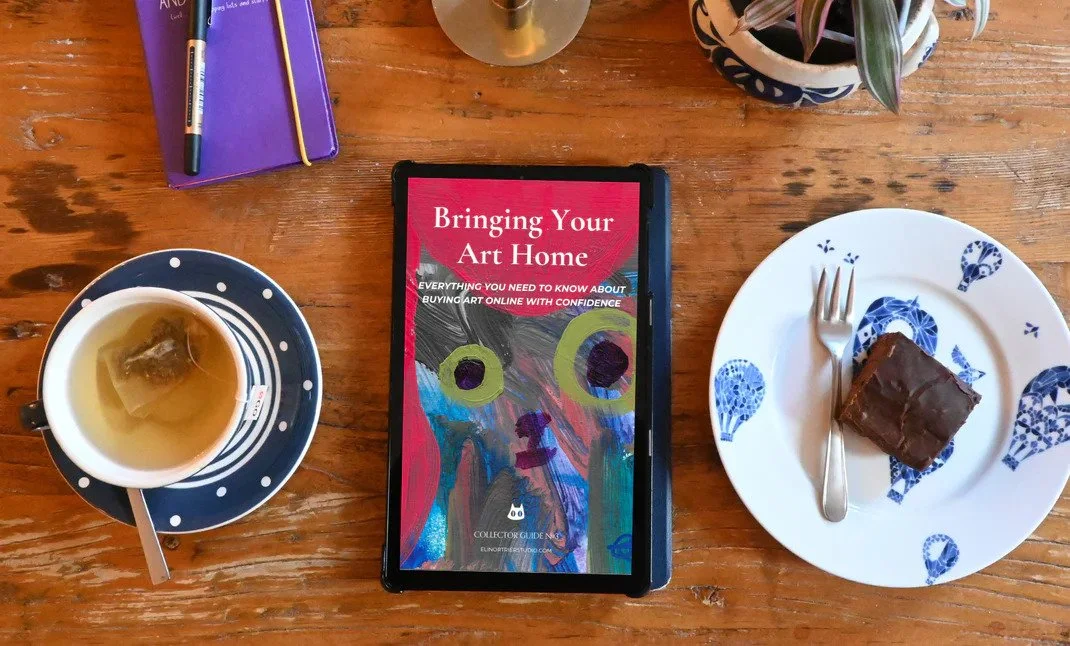
So You Want to Buy Art Online (But You're Terrified)
Buying art online is one of those things that sounds simple until you're actually doing it, at which point you can start freaking out. What if the colours are nothing like the screen? What if it's the wrong size? What if it arrives in pieces? What if you spend actual money on something and then hate it in your house?
These are all reasonable concerns, and nobody talks about them enough. So let's talk about them.
The colour problem
Every screen displays colour differently, which means the painting you've fallen in love with might look slightly different in real life. Sometimes better, sometimes just different. If colour is crucial to your decision, ask the artist. A good one will send you additional photos in different lights, or describe the tones in relation to something concrete. I do this regularly: "it's more terracotta than orange in person" is genuinely useful information.
The size problem
Digital images are liars. Small pieces look enormous and large pieces look modest and nothing gives you a real sense of scale. The best trick I've heard from a collector: measure the dimensions with masking tape on your wall and live with that marked space for a few days. It sounds fiddly but it completely transforms your ability to visualise the piece in the room.
The "what if it arrives destroyed" problem
Any professional artist ships with tracking and insurance. If something arrives damaged, photograph it immediately and contact the artist. This is exactly what insurance is for, and a reputable artist will sort it out promptly. It's rare, but it happens, and it's fixable.
Just ask
This one's important: don't be afraid to contact the artist before you buy. Ask about colours, ask about scale, ask whether a piece would work in a north-facing room with limited light. Most artists genuinely love these conversations - it means you're taking the work seriously. A good artist will respond promptly and without making you feel like a nuisance.
If you're local - or even if you're not - ask about a studio visit. There's nothing quite like seeing work in person, in the space where it was made, to help you understand whether it's right for you. I offer both in-person visits to my Copenhagen studio and virtual ones for collectors further afield.
On timelines: prints typically ship within a day or two and arrive within a week. Original pieces take a little longer to prepare and ship - usually within two weeks of ordering, though international shipping adds time. You can see my shipping policy here. If you're buying from an artist based abroad (hello from Copenhagen), factor in potential customs charges too. When in doubt, ask.
The returns situation
Check the returns policy before you buy. Mine is 14 days for most pieces, which gives you enough time to see it in your actual space in your actual light and decide whether it's right. If an artist has no returns policy at all, that's worth noting.
Certificates of authenticity
Original artworks should come with a certificate of authenticity - a document that verifies the piece, its title, date, medium, and the artist's signature. Keep this somewhere safe, along with your purchase receipt. You'll need it if you ever insure the piece, lend it to an exhibition, or decide to sell it on. It's also just a lovely thing to have: documentation that this object is real and singular and yours.
Framing
If you're buying a print or a paper work, please get it professionally framed with a mat (mount) between the print and the glass. This isn't snobbery - it prevents condensation damage and the print touching the glass. Use archival materials if you can. For original canvases, a simple floater frame that lets the edges of the painting breathe often works beautifully.
Where to put it
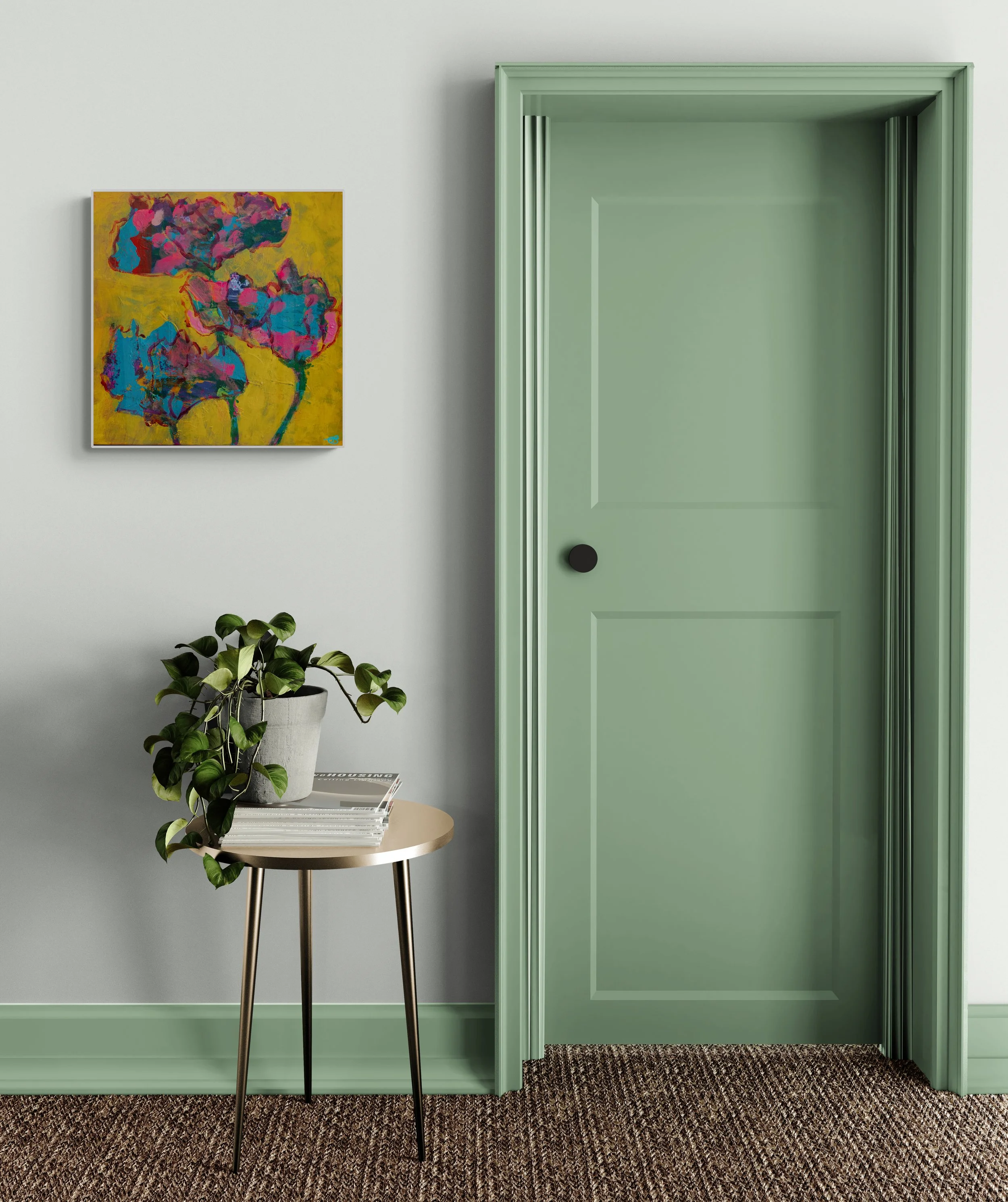
The obvious spot isn't always the right one. Think about where you'll encounter the piece most naturally during your day - not just the biggest wall in the room, but the place where you make your morning coffee, or the corner you pass every time you come home. Art that you stumble across rather than stand in front of tends to work on you in a quieter, more cumulative way.
Think too about what surrounds it. Art doesn't exist in isolation, it's in conversation with the furniture, the light, the other objects in the room. Sometimes a piece that felt uncertain in one spot becomes completely at home somewhere unexpected. Give it time to find its place.
And don't underestimate what happens when people visit. My collectors regularly tell me that their pieces become focal points for conversations they weren't expecting - about identity, about belonging, about what it means to feel at home in yourself. A piece of art that makes your guests stop and ask questions is doing exactly what it should.
The practical stuff
Keep your artwork out of direct sunlight (it fades everything over time), away from heat sources, and away from high humidity. Dust gently with a soft cloth. Don't use cleaning products on original artwork unless you've specifically asked the artist what's safe.
One last thing
Collecting art shouldn't feel like an exam you might fail. There's no wrong answer if the piece genuinely moves you. The best collections aren't the most expensive or the most curated - they're the ones where every piece means something to the person who lives with it.
Your walls are waiting. Go find something that makes your heart do a thing.
You can see the works I have available for online purchase in The Gallery - or email me for an up-to-date list of everything available.
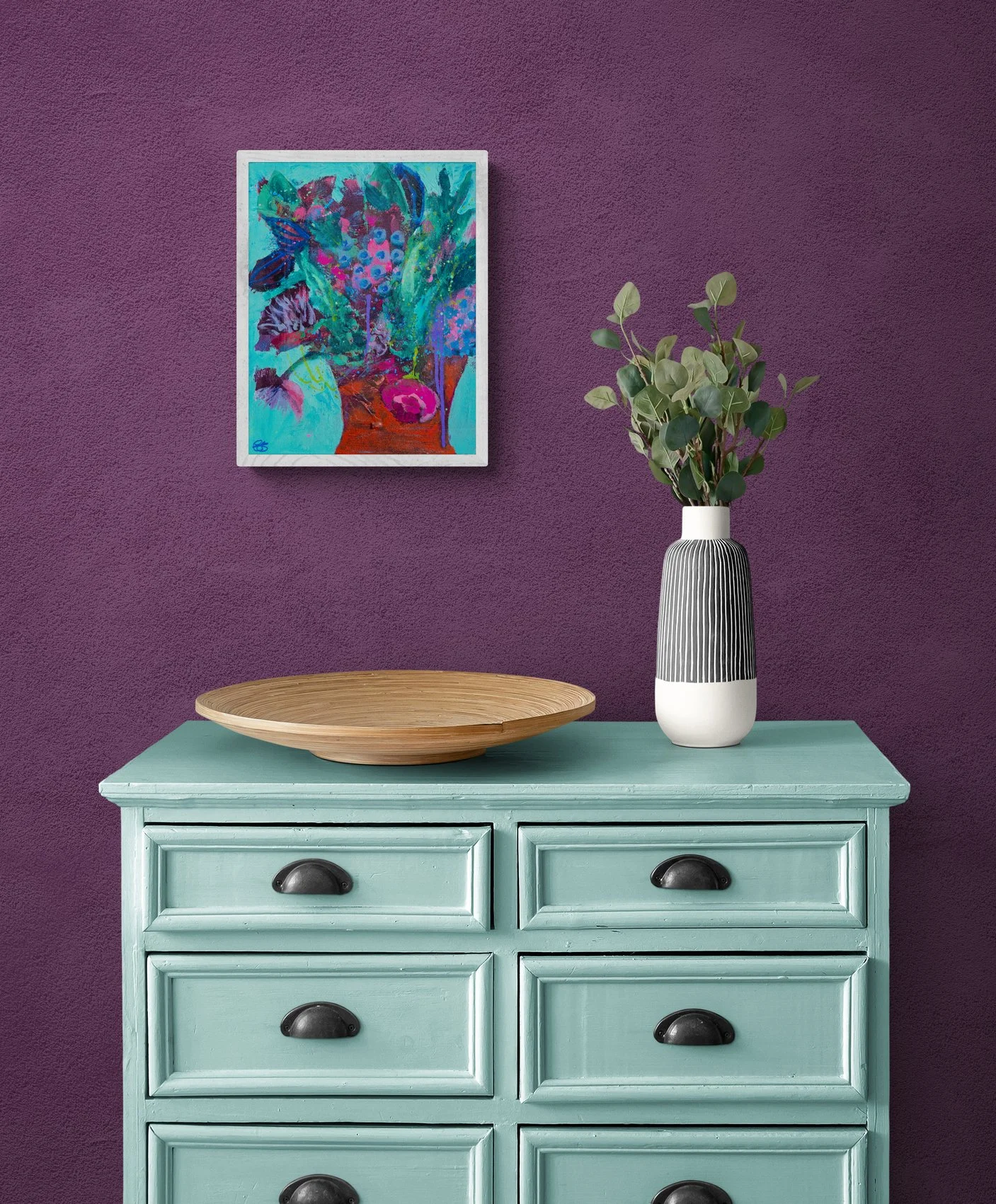

Acrylic on canvas
40x30 cm (15.7x11.8 in)
Unframed
(Approx $518 USD - convert to your currency here)
⭐ Free shipping worldwide