You don’t owe anyone your creative process
If you've ever felt like a fraud for not making constantly - for having fallow stretches, or working in sprints and bursts instead of a tidy daily grind - or resented the fact that the insatiable content beast of social media wants to consume every last scrap of your creativity, then this one's for you.
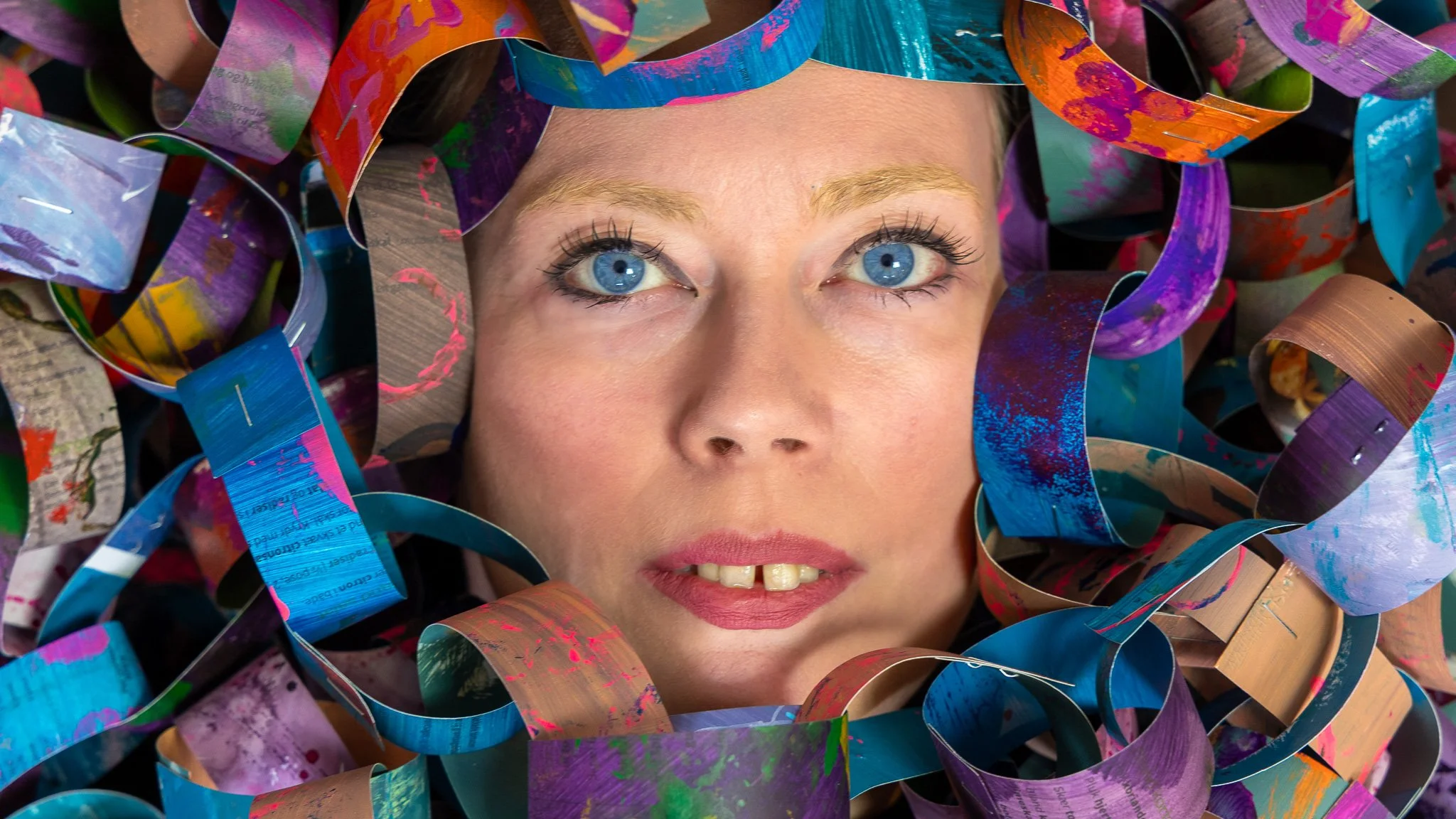
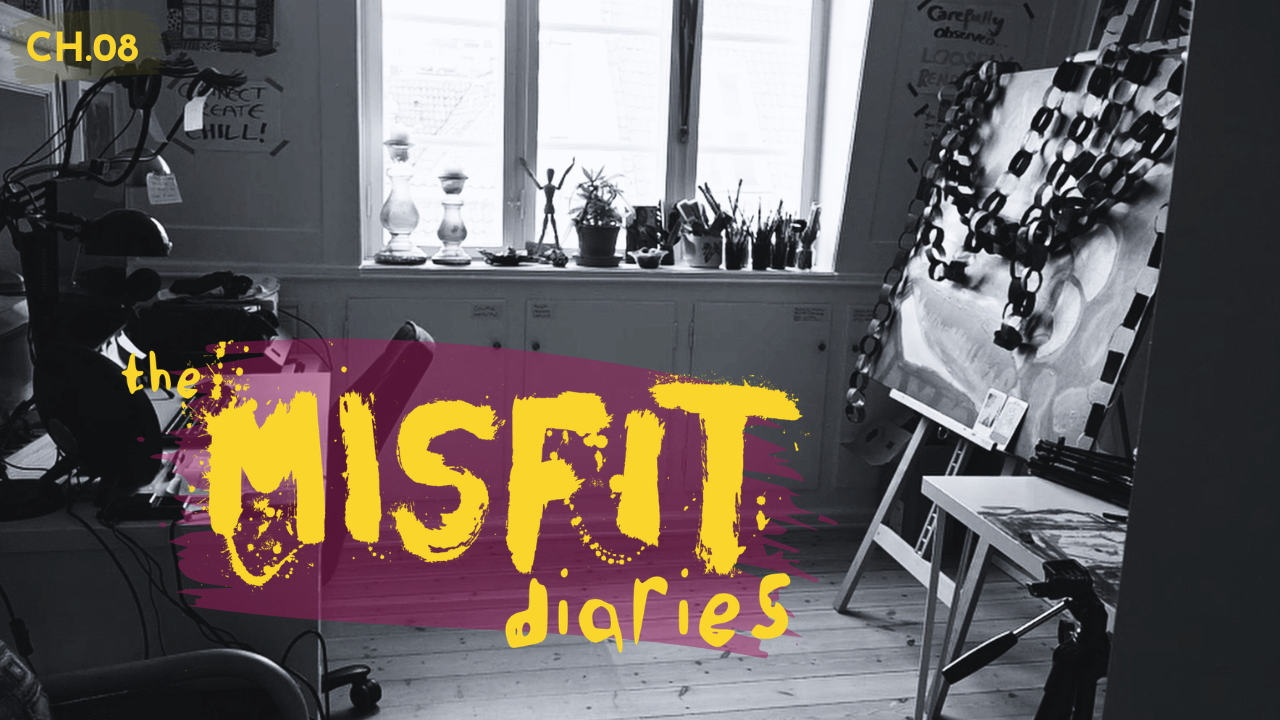
In this video, join me in my studio as I make paper chains and chat about why my creative process looks nothing like the "real artists paint every day" myth we've all been sold. We're talking ebb and flow, long stretches of filling the creative well, the compost heap of ideas quietly cooking in the background, and what it looks like to be a "full-time artist" for this particular full-time artist.
✨THINGS MENTIONED IN THE VIDEO✨
My Cabinet of Curiosities (trace the ideas behind the work)
The video where I painted the paper for these chains
Austin Kleon - Show Your Work
Things Men Have Said to Me Instead of Hello (my 2025 collection)
My friend Tara's article about creativity
My friend Orla
💙 BECOME A FRIEND OF THE HAUS 💙
If you want to support what I do then become a Friend of The Haus! All the details are here.
💌 SIGN UP FOR MY NEWSLETTER 💌
I’m not on social media anywhere else so if you want to keep up with me between videos this is the only place to be. Sign up to my excellent weekly newsletter here.
💛 BUY ART AND MORE 💛
To purchase art, zines, books, and more, visit The Gallery page to see what’s available.
-
One of the most impactful things anyone has ever said to me was when my friend Orla turned round and said, "Zuzu, the problem is you've been trying to be a full-time painter when actually what you are is a full-time artist." And something just clicked. My name is Zuzu, I am a full-time artist.
And on this channel we talk about art, obviously, but we also talk about books and clothes and style and all aspects of being a misfit and living in a world that feels like it wasn't made for you. And if that sounds like your cup of tea, then please do go ahead and subscribe — I hope you will. So whilst we talk today, I'm gonna be making some paper chains. I painted some paper in another video, which I'll link below if you haven't already seen it, and today I'm actually gonna turn them into paper chains while we chat. Let's just get into it, shall we?
So one of the things that used to make me feel like a massive fraud — and I'm sure this will be familiar to a lot of you, particularly if you are some flavour of neurodivergent (I am autistic and ADHD, if you didn't already know) — is that my creative process is not in any way a linear thing. So I barely paint day to day. It's one of the things that I have to have a certain amount of spoons for, and often I don't have spoons for it. There are things that I need to do to keep my business up and running, even though that is the business of being an artist.
And I am, or have become over the years, an expert at repurposing, reworking, rejigging things to make the most out of the things that I do make. And I do actually often get accused of being prolific, which always makes me laugh, because I feel like on a sort of day-to-day basis I spend a vast amount of time not doing very much at all. Now, I know that this isn't true, but it is how it feels.
I certainly don't paint every day, I don't draw every day, and I think it's really interesting that I have fallen prey to some conditioning that I think we all have in the age of the internet — which is that real artists (which is a phrase that strikes fear and dread and vomitousness into my very heart) real artists are painting every single day, they're compelled by it. Which is just such bollocks. Some artists are. It's a very romantic notion. It doesn't take into account any kind of neurodivergence or chronic illness or anything like that. It's just one of those things that is a tiny, narrow idea of what creativity looks like, which is perpetuated by social media, because that rewards this constant output and the feeding of the content beast. But it's actually not really that close to how most of us work.
Now, I know a number of artists who do work every single day, who do paint and draw and keep their tools sharp, and I think that's amazing — good for them, there's nothing wrong with that. I also know an equal number of artists who, like me, don't have the spoons or the inclination or the desire to be constantly outputting.
My brilliant friend Tara — who I quote all the time on this channel, because she is just one of the most wise and thoughtful people I have ever met in my entire life — she talks about creativity being like a wave. With a wave there is the rushing forward and the breaking of the wave and the big kind of explosive climax, and then, equally important, is the pulling back and the ebb, where all the water is gathered back into itself, ready to produce the momentum for another wave. And that, for me, is exactly the experience of how my creativity works.
And what's going on during that ebb period — which I'm in at the moment, as I'm filming this in July 2026 — is I'm not idle. I'm not not making things (case in point, what I'm doing right here), but I'm not working on anything of any significance. I'm just gathering potato peelings for my internal compost heap. And that is my process, which we'll go into in a little bit more detail in a minute. Let's start plaiting some of these together.
I was doing this with tape but I don't like it. I'm gonna switch to glue, because it's shiny and it looks tacky and it's easier to do — but I don't like it. They're gonna look cool though. Tape sucks and glue sucks. One of the things I hate most in my creative practice is the act of sticking one thing to another thing.
So this ebb and flow, this sort of feast-then-famine, cyclical creative process that I go through — that is sort of the design. What is it they say? It's a feature, not a bug. That's just the way it works, that's the way my creative process works. So my creativity doesn't, like, clock off. I'm still constantly making stuff, constantly being creative — it just changes the format slightly. So it might be that I'm doing stupid shit like making paper chains, or...
You know what? I can't deal with the glue. I can't deal with the glue. It's too hot. It's too much of a sensory bleh. I'm just gonna use the fucking tape and they'll have shiny bits and I don't care.
So it might be doing something like making paper chains, or it might look one day like just putting together a cool outfit, or making a zine, or mining old work in the zines that I make for the Friends of the Haus. A lot of that comes from mining old work and going through old sketchbooks and curating and recontextualising stuff that I've already made and making it new again. Like, something else I love to do is to make books out of my work — so even if I'm not creating more work, I'm reworking it, re-presenting it in a slightly different format and making things fresh and new again. How cool is this looking? Oh, that's amazing.
And that whole process — making what I like to call things of little consequence. So I have my big important work, which — it sounds, you know, a bit onerous — but there's stuff that I like to make where I'm actually trying to say something, I'm actually trying to make a point, or make a connection, or join the dots in a particular way. And it's often quite emotionally draining to do work like that. Like, I really put my heart and soul into it. And for a project like Things Men Have Said to Me Instead of Hello, which I made in 2025 — that was some really deep, dark stuff I was mining there, and it took a really, really long time to come out, and I was just completely spent when it did. We had the exhibition in January and I was just knocked out.
But although I haven't been working on anything of significance since then, I made a book, I've made a bunch of zines, I'm using up art materials and playing, I've been upcycling clothes, I've been just using my creativity to make outfits and put together videos for you — and it's all the same muscle. And in the meantime, in the background, this creative compost heap is made up of the play that I'm doing that's sparking ideas, seeds of things that will become something later, and also the things that I'm coming across. I'm refilling my creative well by going to exhibitions, reading books, looking at other artists' work, watching movies, watching TV, all sorts of stuff. It all adds up, it all composts down.
And I feel like the way I like to approach it is that my entire life is a work of art. That's how I like to approach it. So that comes across in what I do with my time, obviously — the physical things that I make — but also in how I dress, what I think about, the people that I hang out with, the events that I put on, the parties I throw, the way I show up in the world, my relationship with my husband. It's all part of this glorious art project, this glorious body of work.
And that's not something that's unique to me. One of my artistic heroes is Leonor Fini, who was an incredibly, deliciously idiosyncratic character. And she lived her whole life as if she was on a stage — like, she was so theatrical. She loved to wear these really incredible outfits and costumes, and she loved to take photographs of herself and perform, and she painted as well, and she would throw these incredible parties, and just every single thing. Like, she lived in a house of cats — she had some ridiculous number of cats, and that was part of it as well. It was constantly sort of making herself into being, into this creative force that both fed into and became her artwork. You can't really separate the two. You can't really separate her paintings from who she was as an artist and the art that she created with her life. And I find that so incredibly inspiring.
And as I am somebody who lives with, you know, chronic illnesses — a lot of pain, a lot of fatigue — I don't have the capability to be someone who is doing something physical. I find painting incredibly physical, I don't have the bandwidth for that all the time. But, you know, maybe I can put together a fabulous outfit, or maybe I can make people feel a certain way, or have an interesting conversation, or make some fucking paper chains, you know? And it all adds up, and it's all part of the same universe.
And the truth is, a lot of it doesn't look like working. A lot of it looks like me just kind of pissing about, having fun. And that, honestly, just goes to show what a puritanical nonsense we've made of the concept of work and the concept of being productive. The fact that my work often looks like doing nothing — that's a big hurdle that I've had to overcome. But the truth is, if I don't have those periods of doing nothing, or what looks like nothing, my brain never stops. If I don't have that, then I can't produce anything, nothing at all. If the well is empty, I can't pull any water up from it.
And I think this is the beautiful distinction between being a full-time artist and being a full-time painter. What Orla did was she put this beautifully simple language around something that I have felt in my bones my entire life — and yet somehow, for a long, long time, still managed to feel guilty about. And I think I said in a video at some point: whenever my painting mojo went away, it used to freak me the fuck out. Like, I used to think that I would never be an artist again, like I'd lost something and it was never gonna come back — which is horrifying. And now I know it's just the ebb. I don't paint all the time. I can't paint all the time. I'm not interested in painting all the time. And that doesn't make me any less of an artist. In fact, I think it makes me a more interesting artist, because I get to do a whole bunch of other stuff as well.
Because what tends to happen is that there's a whole load of what looks like nothing, and then an entire fully formed collection just kind of falls out of me. And I mean, in the case of Things Men Have Said to Me, it took about a year, because I was actually fabricating stuff and making vessels and things from scratch out of papier-mâché, and one of the pieces has, like, thousands of pearls which were hand-glued onto a large canvas. So, you know, the fabrication of the work took a long time. But that was pretty much what I was working on for the entire year — I'd come into the studio and I would be doing that, and I'd be doing the bare minimum to keep everything else ticking along. But there was no hesitation, there was no faffing about.
I don't tend to do sketches or anything, because I find that once I start doing sketches and, like, solving the problems that a piece might have — once I've solved the problems, there's no point making the work, for me. I don't know if that's ADHD or what have you, but the solving of the problems is the making of the work for me, and if that's not there, then I tend to feel a bit like all the air's gone out of it. Like, I need variety or I will just go insane. Like, if I have to do the same thing all day, every day, forever, I'll lose my shit. And I think actually most creative people are like that.
And being an artist, essentially, is about noticing things, and that takes many, many, many forms. There's something that's happened particularly with visual artists in the age of the internet, which is that there's this kind of "show your work" idea. Austin Kleon wrote a whole book about it, which I have somewhere, which is wonderful. But I think it has contributed to this idea — which is peculiar to visual artists — that your creative process is suddenly turned into a content feed. Like, you have to have something to post to show that you're working at all times. And it almost feels — I mean, it feels like a crazy prison. And there's a very particular idea of what counts in that instance, like what you should be posting, and a lot of it is to do with the actual physical process of painting — mixing colours, or, you know, time-lapses of paintings being produced. And that is so not how my creative process works at all.
When I'm in the middle of the work — the capital-T, capital-W Work, the really important stuff — I'm not putting up a camera. I need to be in it, I need to be feeling it, I need to be immersed in that. I don't want to be thinking about performing or switching a camera on or anything like that. It's just not conducive to me making my best work. I don't make good videos that way, and I certainly don't make good art that way. It's a really personal, private birthing process, I suppose. But once the work is made, I'm happy to come out and talk about it — you know, do talks and give interviews and share cool marketing stuff and make sort of tangential art to support the release of that particular collection. That's fun.
God, I am obsessed. This is amazing!
So I think it's peculiar to visual artists that they're held to this standard, because I don't think we do the same with authors. I think it's understood that writing a book takes a lot of private, focused time — and planning a book is the same, researching a book, putting it all together. Culturally, we accept that that is the work. Like, we don't expect writers to show up on Instagram typing out their rough notes every single day. We sort of accept that, oh no, that's a private process, and they need to go into their heads and pull the work out, and then they'll come out and they'll promote the work, and then they'll probably go back into their cave while they figure out what the next thing is that they're going to write. They're not expected to perform their process in the same way that visual artists are.
And the same with musicians as well. We accept culturally that an artist will go into the studio and they will make their album, and we'll hear it when it comes out and probably not before. But we expect this stuff to take time and to happen behind closed doors. But with visual artists, we want to see everything out there all the time. I think it's a really weird expectation.
There is a certain amount of privacy and solitude that is necessary for the making of good art. You need to be able to get into your head and pull out the stuff that matters without thinking about performing, without thinking about being on display — even if it's just to the lens of a camera. There's this guilt that has been installed in us that, oh, we won't get anywhere unless we are playing this particular game. And if you have watched me for any length of time, you might have realised by now that I'm not for that. I'm not interested in playing any particular game. I do what I do for myself, and that's it.
And I think it fits in quite nicely with the way I work with stuff generally. Like, I'm very monotropic. I like to work on one thing at a time until it is finished. I don't like to chop and change, I don't like to move around too much, I'm quite rigid in my work system. But I think that's quite interesting, because it mirrors my creative process. If I'm working on a collection, I'm not doing anything else — I'm not thinking about anything else, I'm not worrying about anything else, I'm not planning anything else. I am all in, completely. And if I'm working on YouTube, I'm all in on that. If I'm working on a book, I will just work until it is finished. That's just part of my creative process, because that's how my energy works. I work when the energy is there. I can't rely on it being there all the time, so I make the most of it while it's there. And then when it goes, I rest without guilt or shame or anything. It's just — we're going fallow, that's great, let's just rest.
The interesting thing, I think, is that I decided when I built the Haus of Cats that I was going to share my process, my artistic process, but it wasn't going to look like what people expected it to look like. I don't like to share things like, you know, mixing my colours, or how I come up with my colour palettes, or how I actually put paint on canvas, or "look, this is me in the studio doing this thing and this is why it matters." I don't like to do that. In the moment, I'm not in art-making mode, I'm in art-promotion mode, which is a very different sort of creativity.
So the way that I share my process these days is: I show you what's going on under the hood. I show you what I think is far more important than my fucking colour palette. I show you where the work is coming from. I show you what I'm thinking about, and what's inspiring me, and where the ideas are coming from. And I give you an insight into following those creative threads alongside me. So you can see — if you go to the Cabinet of Curiosities... if I come out with a new collection that's about bodies, or about monsters or something, you can go to the Cabinet of Curiosities on my website and you can trace my thinking back to when this idea first clicked for me, or when I was first into it. And you can trace it back through months or even years.
And I don't know when my compost heap will be done cooking. I don't even know if the thing that I think is cooking is the thing that's actually cooking. So I think at the moment that what I'm working towards is some collection about the experience of having a body. But something else completely could sneak up on me and pounce on me in the middle of the night and go, "Hey, it's painting time, and what we're making is this completely different thing from what you expected." And that's kind of part of the fun. Part of the joy, for me, of being an artist is that you never know what's going to happen next.
Like, Things Men Have Said to Me Instead of Hello took ten years to come to fruition. Ten years — that's a long fucking time. And I have other ideas that I've been thinking about for, you know, at least as long, if not twice as long. Because art takes time — and, you know, the idea you have in one year, you might not have all the information to make the thing you want to make until, you know, ten years down the road. So, again, it's all part of the process.
But yeah, that's how I share my process these days, and that makes me happy, because I am a very thinky sort of person. I'm a very intellectual sort of person, I suppose. And I like that 90% of my art happens up here, and then the last 10% is when it all comes out of me — onto a canvas, or onto a vessel, or onto a sculpture, or what have you. And the art is my thinking made visible. So what I try to do now is I try to make the rest of the thinking visible by sharing my potato peelings — my inspirational potato peelings — and that's me sharing my process with you. And it looks very different from what you'd expect, because I can't do anything the same as everybody else, can I? I tell you what, it's a blessing and a curse, it really is. Always gotta be fucking different, don't I?
So I guess what I want you to take away from this — if you take anything away — is just that creativity and creative processes come in all shapes and sizes, and there are as many ways to be an artist as there are people in the world. We have been fed, for many years, a particular idea of what an artist looks like and what their creative process looks like. And if that's something that has never felt right for you — if that's never sat right with you, because your way of doing things looks completely different, particularly if you are neurodivergent, or if you are chronically ill, or have mental illness, or any number of other things — then that's cool too. And, you know, I guess I'm sharing my way of doing things as an alternative to that. Maybe that resonates with you, maybe it doesn't, I don't know. But this is how I be an artist. This is how I artist. This is how I live my artist life. And I'm really glad that I get to share that with you, in whatever way it looks, even if it looks different from everybody else.
That's it — that's all I have to say today. So I hope you enjoyed the video. If you haven't already subscribed, please subscribe, it really helps the channel. And I hope to see you again another time. Love you lots and lots. Bye!
See more videos: