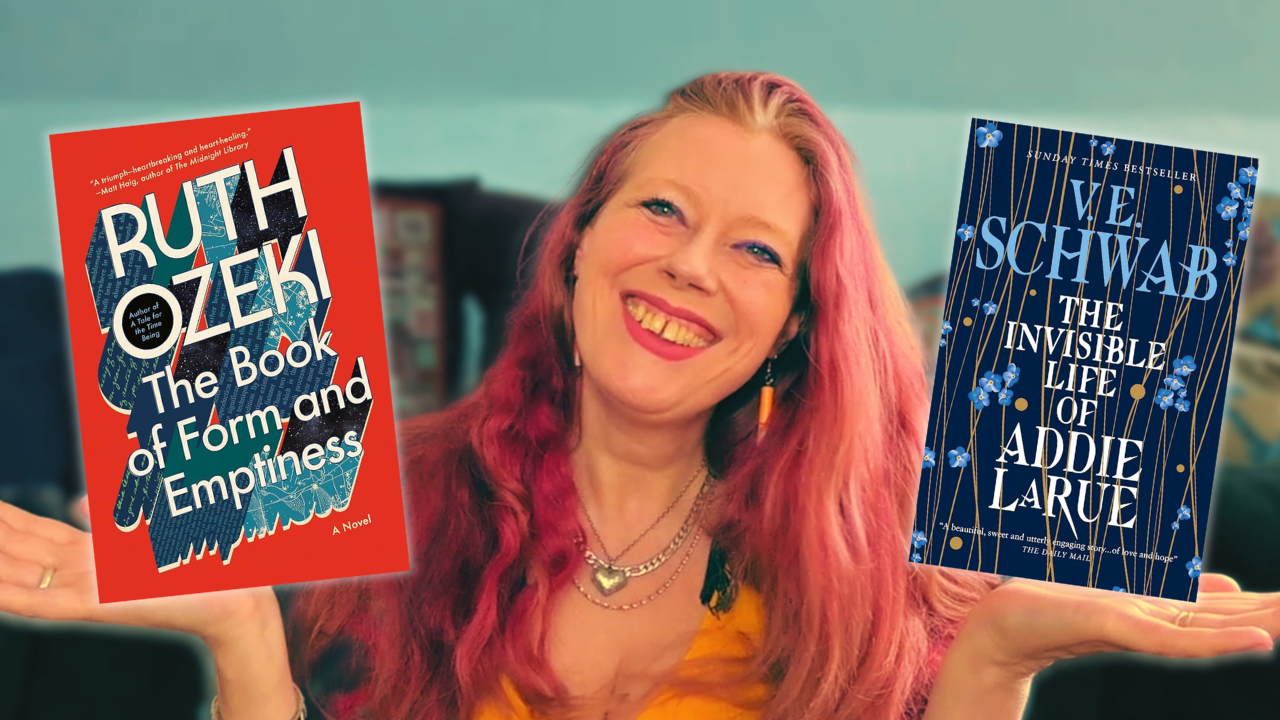
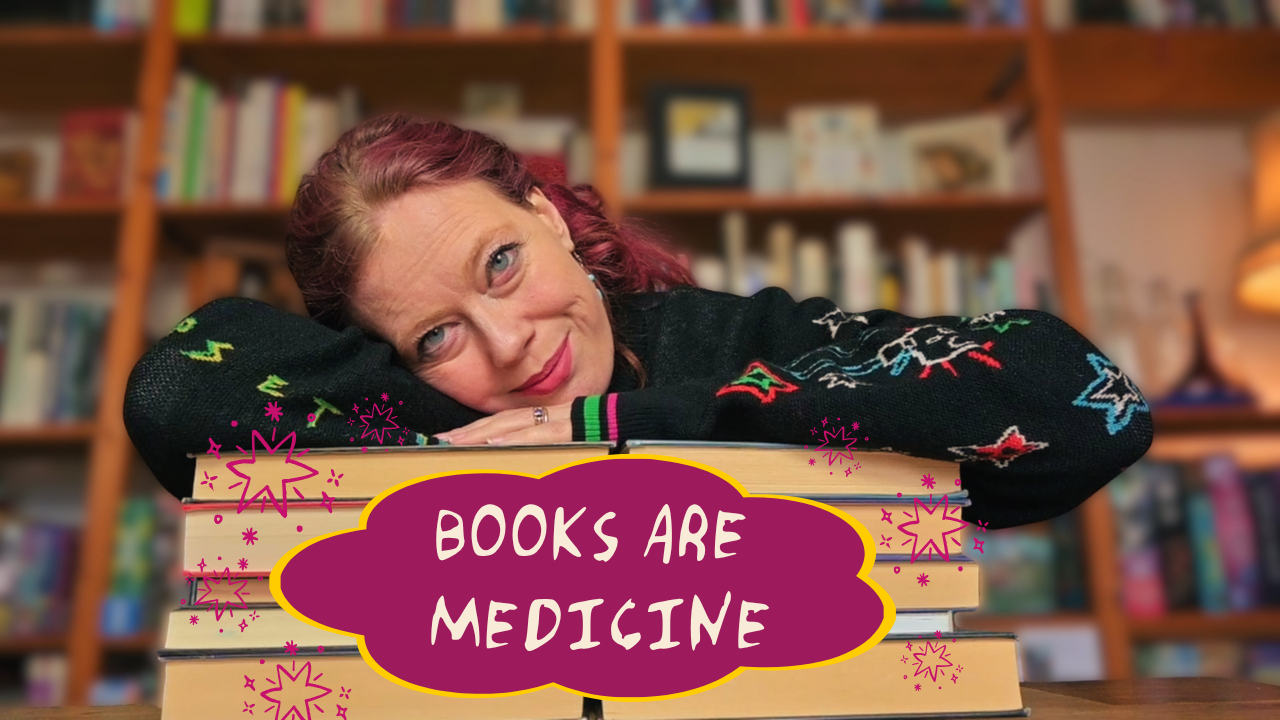
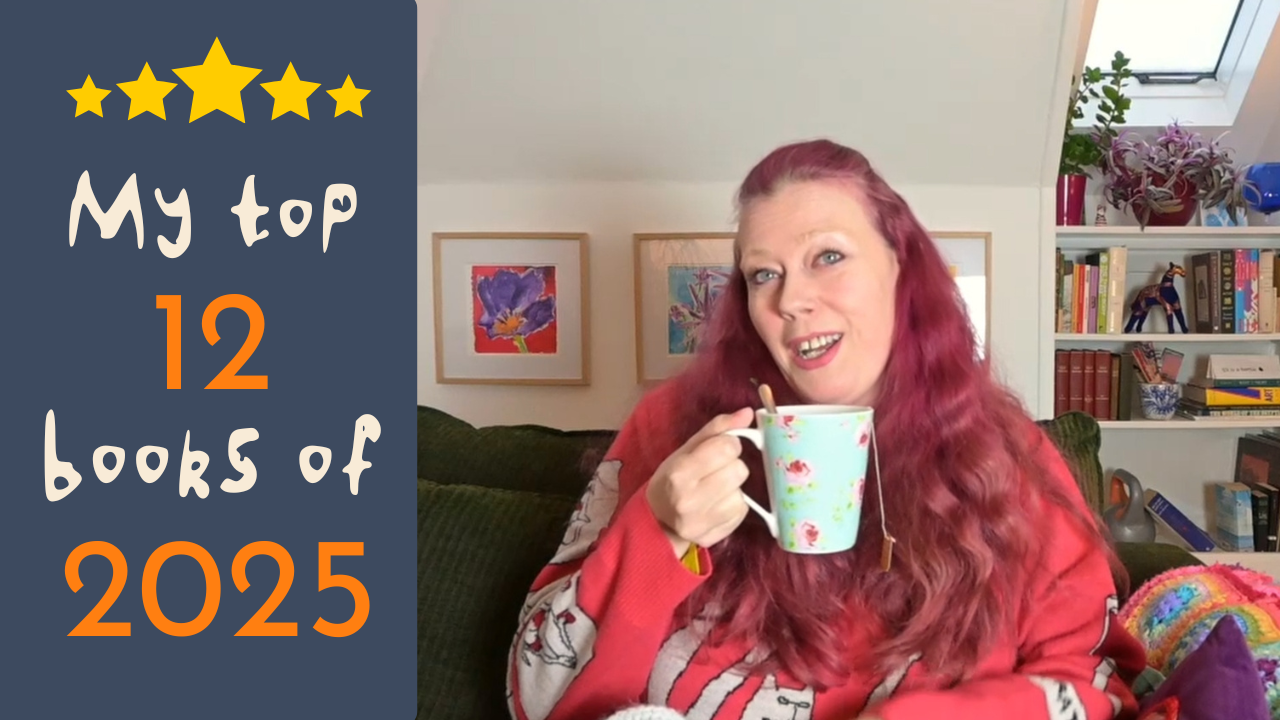
POV: we're on the couch talking about my favourite books of 2025
Kick off your shoes and snuggle up on the couch with me as I share the 12 books that earned 5 stars from me in 2025.
We're talking science books that got me super excited about the incredible world around us, art books that had me running into the studio with new ideas coming out of my ears, and a handful of fiction reads that kept me up way past my bedtime.
Grab a cup of tea, get cosy, and prepare your TBR because this vid will have it groaning 😜
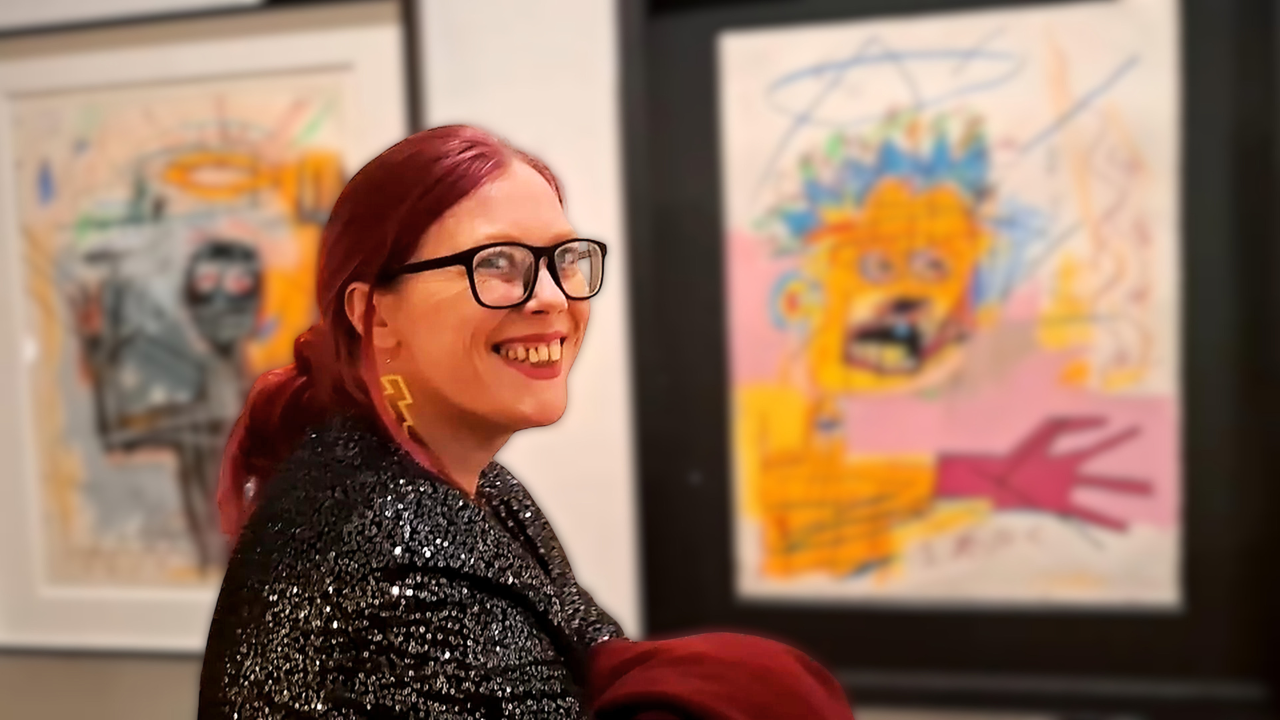
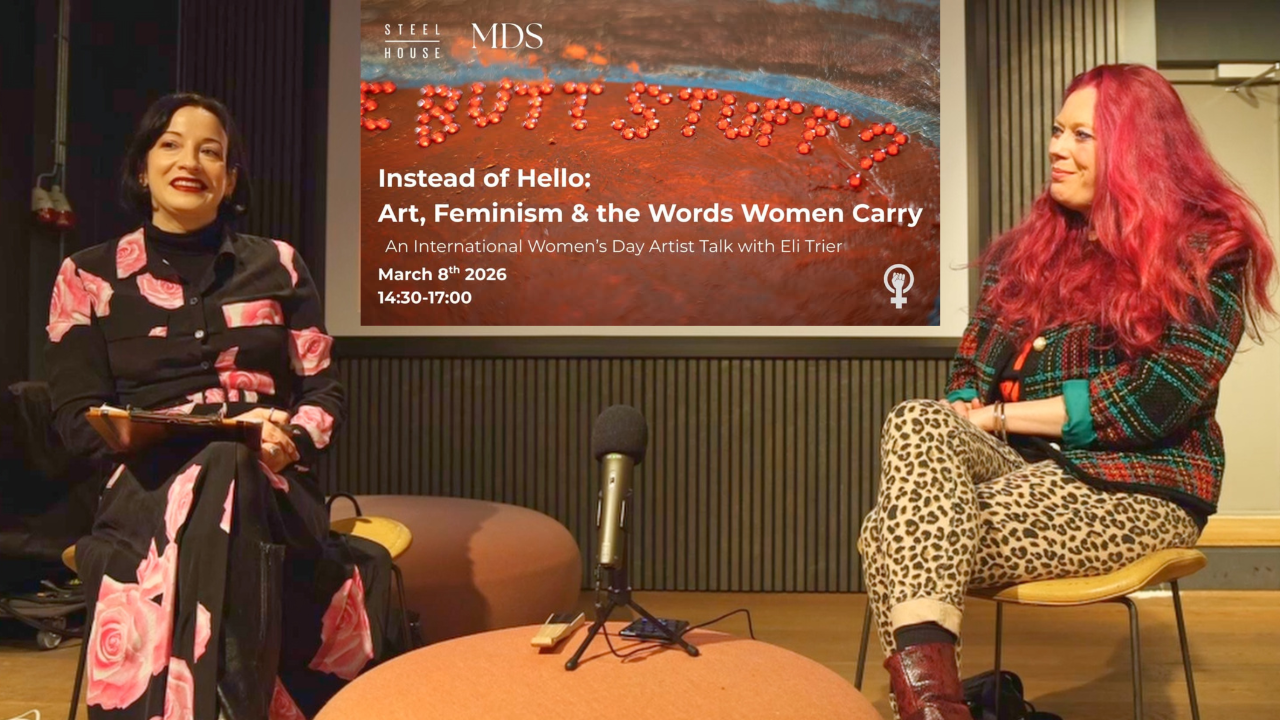
Things Men Have Said To Me Instead Of Hello is currently on show at MDS Studio Gallery, Birkegade 7, 2200 CPH until March 8, 2026
💙 BECOME A FRIEND OF THE HAUS 💙
If you want to support what I do then become a Friend of The Haus! All the details are here.
💌 SIGN UP FOR MY NEWSLETTER 💌
I’m not on social media anywhere else so if you want to keep up with me between videos this is the only place to be. Sign up to my excellent weekly newsletter here.
💛 BUY ART AND MORE 💛
To purchase art, zines, books, and more, visit The Gallery page to see what’s available.
✨THINGS MENTIONED IN THE VIDEO✨
Marianne Power on my podcast
Amy McNee on my podcast
The Box nightclub
If you prefer to read, here’s the transcript:
My Best Books of 2025
It is absolutely freezing cold today — it has been for a while. It's so cold that the canal outside of my house has frozen over. It's currently snowing, which means it's the perfect day to snuggle up with a nice cup of tea and a pile of crochet blankies (made for me by my incredible friend Jo) and talk about my favourite books of 2025.
I use an app called Storygraph to track everything I read. It's a bit like Goodreads but it's not owned by Amazon — it's Black woman-owned, and much more user-friendly. If you want that Goodreads functionality without supporting Amazon, it's a fantastic option.
I read quite fast and quite a lot. I read 78 books in 2025, which is fairly average for me — sometimes more, sometimes less. I go through real spurts: I'll read 10–15 books in a week and then nothing at all for three months. Of those 78, there were 12 I gave five stars to.
My criteria for five stars: it has to be profoundly good. I have to really, really love it — something I want to own and know I'll come back to over and over again. I apparently give five stars to more non-fiction than fiction. Of the 12: four are fiction, five are art books, and two are science books (which is par for the course — I love natural sciences).
I don't have physical copies of most of these because I'm a huge advocate of using your local library. At some point I'll buy the ones I love, but for now, let's just get into it.
Love Me by Marianne Power
I read this last February. I've known Marianne for over ten years, and she originally wrote Help Me, which followed her trying out a self-help book a month for a year (spoiler: it nearly drove her insane, and it's very funny). Love Me is about her complicated relationship to sex and relationships — she doesn't have kids, isn't married, isn't particularly interested, and had a lot of hang-ups she decided to unpack. She basically went on a voyage of discovery to figure out why she was like that, whether it was okay, and what other people felt.
Her books are so personal and vulnerable, and she's an incredible writer — an absolute no-brainer five stars. I'd recommend it even if you're happily partnered with no issues in that department, because she has this rare gift for taking really thorny, difficult subjects and making them genuinely engaging and funny. It never tips into trauma porn; you're with her the whole way through.
The Light Eaters by Zoë Schlanger
The subtitle is How the Unseen World of Plant Intelligence Offers a New Understanding of Life on Earth, and plants are just so incredibly exciting. The average person knows so little about how they actually operate, and I really encourage you to delve into it.
It's written by an environmental journalist who got fed up of reporting horror stories about climate change and wanted to research something more joyful and uplifting. What biologists are currently learning about plant life is extraordinary: they have the ability to communicate, they can recognise their families, they can hear sounds, they can feel your touch. It gave me a really renewed respect and appreciation for the plants in our house. I've always talked to mine, and now I know they can hear me — there's something genuinely wonderful about that. Highly recommended.
We Need Your Art by Amy McNee
The subtitle is Stop Messing Around and Make Something. I'll be honest, I'm not usually a big fan of creativity books. They tend to be quite prescriptive and repetitive, and I really wasn't expecting to learn anything new.
I put this book down halfway through to go into the studio and pick up my sketchbook and make something — which, for a creativity book, is kind of the point. Amy was on the podcast in summer 2025 (I'll link the episode) and she's a fantastic voice, a real encourager to a lot of people. The book is brilliant, and the podcast conversation was great too, so do go and have a listen.
I Contain Multitudes by Ed Yong
The subtitle is The Microbes Within Us and a Grander View of Life. Ed Yong also wrote An Immense World (which I haven't got to yet) and did some brilliant reporting on Covid — I believe he won a Pulitzer for it.
This one is about bacteria and other microbes: the symbiotic relationships they develop, how the gut microbiome works, the sheer power of germs and how vital they are to so many ecosystems. None of us really pay attention to this in our day-to-day lives, but there's so much happening all around us at a microscopic level. It did give me the creeps slightly when he talked about microbes on the skin — my imagination ran away with me — but absolutely fantastic. I really want to make some art around bacteria at some point; I love the way they look visually. There's one story about the Hawaiian bobtail squid, which has a symbiotic relationship with a type of bioluminescent bacteria that makes it invisible from underneath — predators just see what looks like moonlight on the water. That one is staying with me.
Get the Picture by Bianca Bosker
The subtitle is A Mind-Bending Journey Among the Inspired Artists and Obsessive Art Fiends Who Taught Me How to See. It's about a journalist who wants to understand what art is, what makes art good, what makes art sell, and how the gallery system and art fairs actually work. Obviously I was going to want to read that.
It's a very specific slice — she's based in New York, so a lot of it covers the New York gallery scene — but it's a brilliant insight. Simultaneously deeply chilling (the art world is, largely, a load of bollocks) and genuinely inspiring and heartening, because it makes very clear that there are so many artists in the world choosing a completely different way to be: directly connected to the people their work is for. I found that really affirming. Thoroughly enjoyed it.
Drawing Blood by Molly Crabapple
A memoir, and an easy five stars. Molly Crabapple is an illustrator — more known these days for reportage illustration, going to war zones and conflict areas and drawing what she sees — and I love her illustration style. It's absolutely gorgeous, and she's just a really interesting character.
The book follows her life and career, and I found it so inspiring — and, honestly, a little bittersweet, because she just seems to have had this extraordinarily charmed existence full of remarkable opportunities. She ended up with a bed at Shakespeare and Company in Paris. She wrangled herself a job as house illustrator for The Box in New York (a private members club with cabaret, drag, and circus). She eventually went to Guantanamo Bay to illustrate a trial there. Growing up as an awkward kid in rural England, none of that felt remotely in the realm of the possible for me, so I found it both magnificent and a little bit wistful. She's fascinating. Loved it.
Funny Weather: Art in an Emergency by Olivia Laing
Olivia Laing is one of my favourite non-fiction authors — one of those writers whose books I have to space out because picking one up guarantees I'll emerge with a reading list a mile long, a film list a mile long, and an enormous number of rabbit holes to disappear down. The intellectual excitement is quite an assault on my nervous system in the best possible way. I keep myself a book or two behind their latest release so I always have one ready when the time is right.
This is an essay collection spanning their career, covering why art matters — particularly in times of political crisis and turbulence. As someone who makes work that deals with difference, feminism, and otherness, reading about why that work is important and how it matters is genuinely heartening. (My Things Men Have Said To Me Instead Of Hello collection is probably the most overtly political work I've made to date, and certainly the most widely relevant.) Brilliant, brilliant book — especially right now, when the world is doing what it does.
10 Minutes 38 Seconds in This Strange World by Elif Shafak
My book club assigned this one, and I talked about it in my September vlog. The main character, Tequila Leila, is a sex worker who has been murdered. As we're reading, she is in the final moments of dying — there's a beautiful idea in the book about how it takes time to adjust to a new state of being: you don't become a parent the moment you have a child, you don't become a retiree just because you leave your job. It takes a while for your brain to catch up with a new identity. Death, Shafak posits, is a new identity, and it takes Leila 10 minutes and 38 seconds to come to terms with it. In that time, her life flashes before her, and she lets us into this incredibly rich, beautiful, love-filled world.
Really, it's a story about chosen family. About the acceptance and love that people living outside the mainstream are capable of, and the way they take care of each other. It's told through tastes and smells and the memories they trigger, which makes it sensorially extraordinary. I nearly cried just now thinking about a book I read eight months ago, so that should tell you something. If you've never read Elif Shafak, start here.
Maureen Fry and the Angel of the North by Rachel Joyce
Rachel Joyce wrote The Unlikely Pilgrimage of Harold Fry, which I loved deeply — she has this incredible ability to show you how flawed and how beautiful humanity is, and how much capacity people have for love and kindness and compassion. She's since written two further books following different characters from the original. This one is told from the perspective of Harold's wife, and picks up what happens to her afterwards. It's only 126 pages and I howled all the way through it.
If you want to start somewhere with Rachel Joyce, my personal favourite is actually Miss Benson's Beetle, which has a natural sciences thread and a beautiful friendship, and also makes me cry buckets. Everything she writes is wonderful.
Everybody: A Book About Freedom by Olivia Laing
I read two Laings this year (I said I space them out — 2025 clearly called for extra doses). This one is about the body: through the lens of art, history, and culture, it covers bodily autonomy and rights, the way trans people are being treated currently, and simultaneously celebrates bodies as tools for resistance and sources of power.
It's very much in alignment with a lot of the work I've been doing, and once again, Laing and I are completely simpatico. Wonderful.
There Is No Antimemetics Division by qntm
Definitely the weirdest book on this list — and possibly the weirdest book I've ever read. It's science fiction about anti-memes. A meme, in its original sense, replicates and spreads. An anti-meme self-censors itself: it exists, but the moment you stop actively engaging with it, you forget it entirely.
There's one scene that illustrates this perfectly: the main character is watching the most horrifying, terrifying, dangerous creature imaginable coming straight towards her. It's almost right in front of her. And then she turns around, completely forgets, lights a cigarette, and walks away. The idea that something life-threatening could be right beside you and simply cease to exist in your mind the moment you stop looking at it — chilling. Brilliant. It's also, at its core, a war of ideas, and it has a genuinely surprising twist at the end that is unexpectedly, wonderfully romantic. Five stars, no notes. Even if you're not a sci-fi reader, it's accessible and absolutely worth your time.
Again, Rachel by Marian Keyes
A very personal favourite to end on. Marian Keyes wrote Rachel's Holiday about 20 years ago — the story of a woman with cocaine addiction going to rehab and rebuilding her life. Absolutely wonderful. Keyes has this same rare ability to take something genuinely awful and pass it through the medium of humour so it becomes relatable and connective rather than traumatic and voyeuristic.
Again, Rachel picks up the story 20 years later — the real-world time elapsed between books is the same as the in-world time, so Rachel is now in her 40s and navigating a different set of challenges. I often re-read books because I miss beloved characters, so to reconnect with people I loved in this way was really, really special.
My friend Jo (she of the blanket) reminded me that Marian Keyes existed, and I'm so glad she did. This one is a real cosy read, and a joyful one.
Those are my 12 best books of 2025. I hope I've added to your already-groaning to-be-read pile.
See more videos: