Ep #10: Zines, punk, and creative fearlessness- with artist Dave Conrey
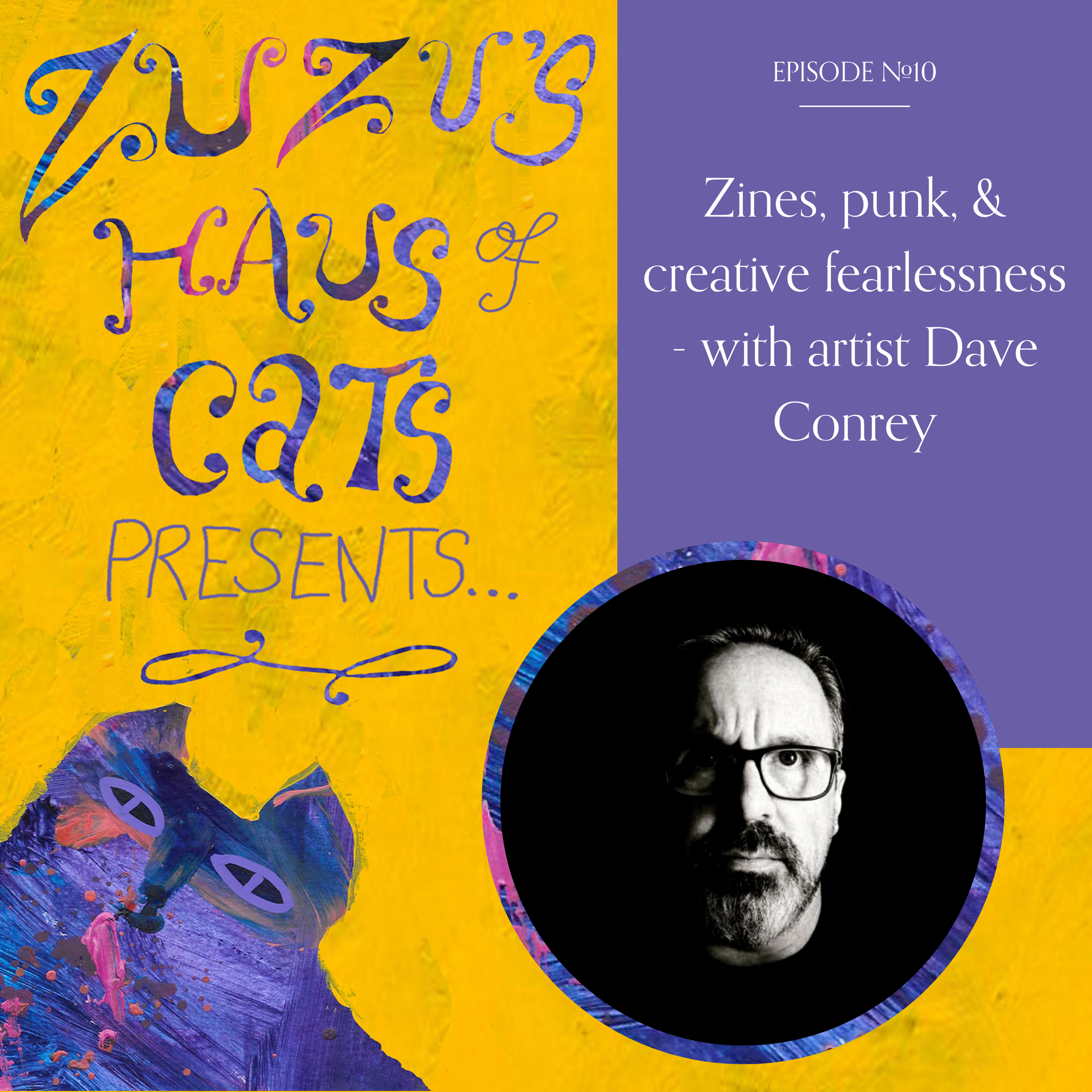
In this episode, I sit down with the wonderful Dave Conrey - artist, graphic designer, and zine-maker extraordinaire - for a conversation that had me itching to get back to my studio before we'd even finished recording.
Dave and I originally connected way back in 2013 (which is basically a century in internet years), and it was such a joy to reconnect and dive deep into his creative practice. What I love about Dave is not only how fearless he is when it comes to his creative output, but how excited he gets about his work too. He was so inspiring to talk to!
If you're someone who gets excited about DIY/punk culture, is looking for a way to bring more tangible, touchable art into your life, or has ever wanted to make a zine but didn't know where to start, this episode is absolutely for you. Dave's enthusiasm for experimentation and his "what would happen if..." approach to making art is genuinely infectious.
Listen to the episode here (click the arrow at the bottom right to play), or find it wherever you get your podcasts:
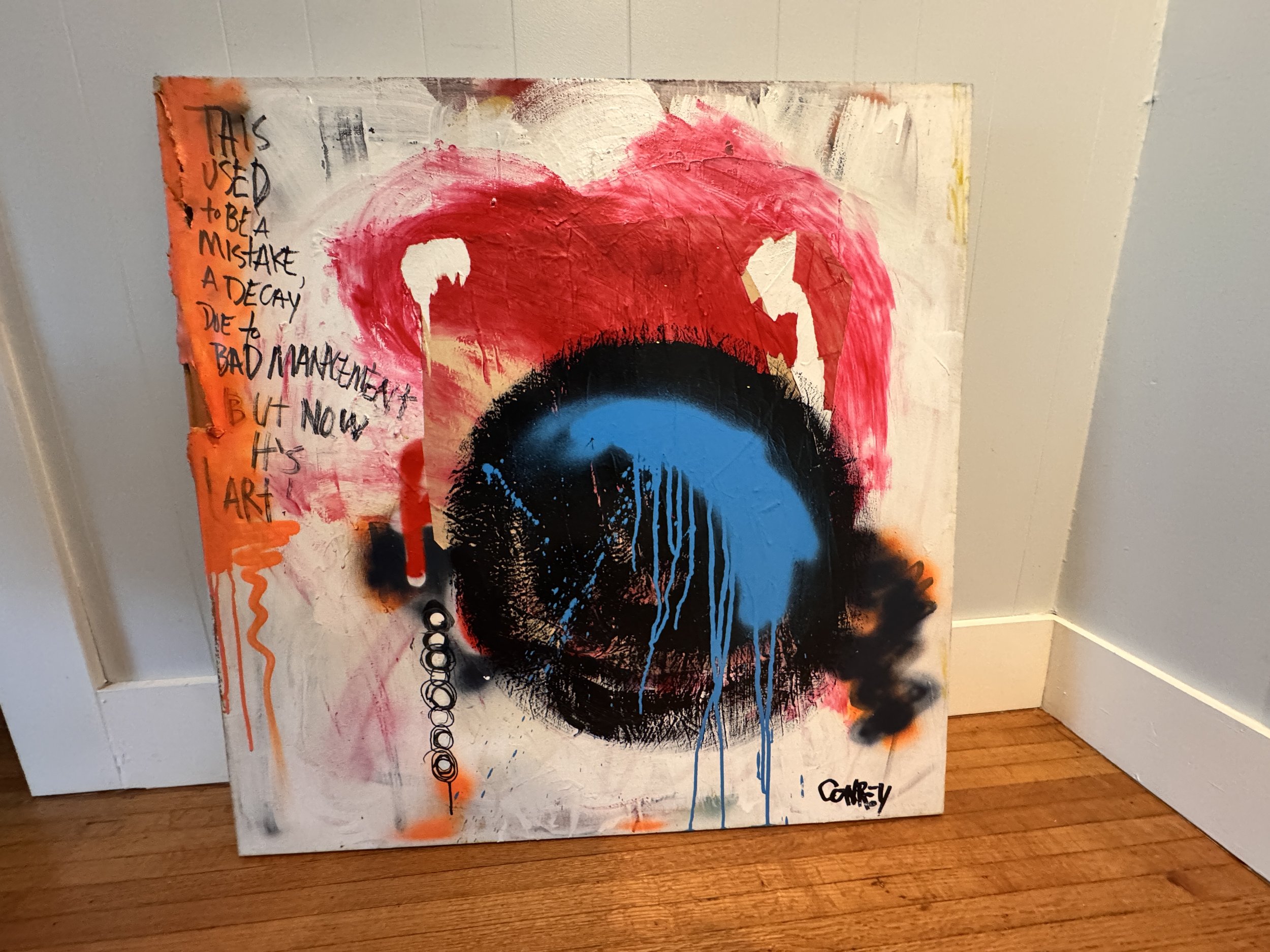
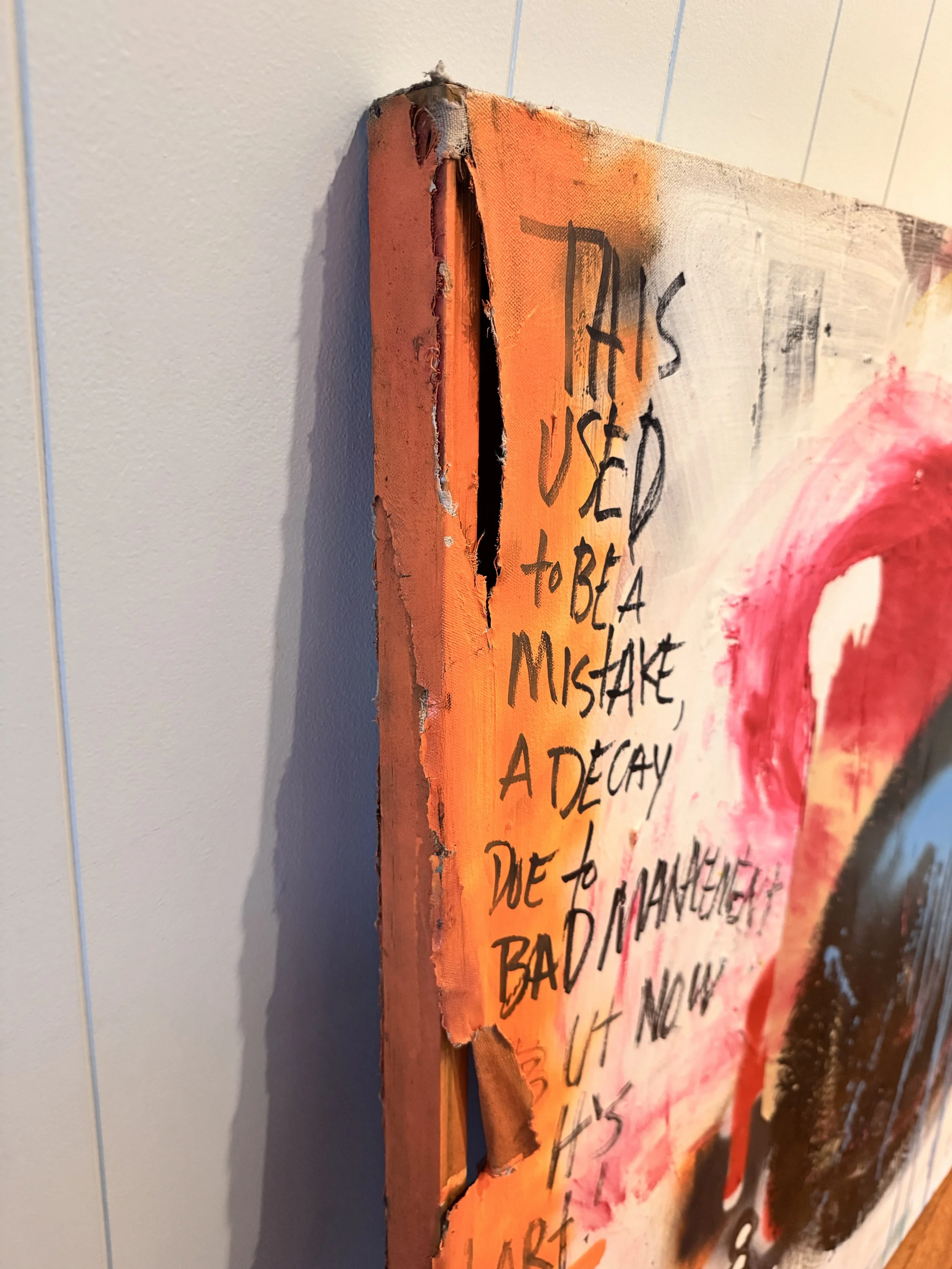
Dave’s ‘Most Important Piece’ as referenced in the episode:
-
Eli: Hello and welcome to Zuzu's Haus of Cats Presents. I'm your host, artist Eli Trier, although you can call me Zuzu. On this podcast, I talk to my fellow artists about the magic of the creative process. We'll talk about what they make and in particular, how they make it. Their rituals and workflows, inspirations and disenchantments, ebbs and flows. We'll even take a peek behind the scenes of their businesses to see how they're using their creativity there too, and how they balance the needs of their business with the needs of their art.
If you're interested in getting a behind-the-scenes look at what makes artists tick and enjoy conversations about art, creativity, neurodivergence and business, then you're in the right place.
Hello and welcome back to Zuzu's Haus of Cats Presents. I hope you're enjoying season two so far. I certainly know I am. Today, the Haus of Cats is so happy to present the amazing Dave Conrey.
Dave is an artist, a graphic designer, and a hardcore zinester, as well as being an old punk. So he and I have lots in common there. He loves sharing stories, art process, strategy, and being creatively fearless over on his Substack, which is fantastic, by the way. I am so happy to be talking to Dave today. So let's just get straight into it.
Background and Creative Journey
Eli: Welcome, Dave. Thank you so much for joining me today.
Dave: Happy to be here. Thanks.
Eli: Dave and I actually met many years ago. We were just talking about it. It was like 2013, which is about 100 years in internet years. We've followed each other in various different ways over the years. I came across you again about six months ago when you were doing The Hungry, which is about helping creative people find their people and navigate the crazy world of internet marketing.
But you do all sorts of things. Do you want to get us started by telling us a little bit about your background, your art, how you came to be where you are now?
Dave: I'm an artist. I call myself an artist and designer. I'm actually a graphic designer in a former life. Sometimes I'll tell people I'm a retired graphic designer because I don't do client work anymore. Unless one of my relatives comes to me and says, can you design me a logo? Then I think about it for three seconds and then say no.
I use that skill though in my work all the time. Although I am an abstract artist, the fundamentals of graphic design go into my work all the time, whether it's typography or composition or balance and line and colour and all these things that are fundamental to graphic design. So I use those often. I can't shuck it completely.
I also make zines. I've written books. I've laid out my own books all by myself. That's what I do. As far as my art is concerned, everything I make is just a pursuit of, let's see what happens. What if I did this? Then I go down that road and explore things and see how it works. I do it a few times just to make sure that I knew what I was doing. I really chase creative impulse mostly.
I mentioned recently on Substack Notes, I said I'm more interested personally in the process than I am the final result. Once a piece is done, it's almost like, okay, well, that's going in the corner for now. Then I'm off ready to figure out what can I learn about my process next.
Eli: That's fascinating. I think there's so much of that design background that comes through in your work. You do a lot of collage work and a lot of mixed media bringing together of interesting things. I don't think you can do that well unless you have an eye for design.
Dave: I've seen people attempt it and there definitely is an advantage to being able to do that because my design career was mostly magazines. Page layout was a fundamental fact of that. Between a cover design versus an interior page design, there's things that you have to follow - rules you can follow and rules that you can break. At the end of the day, you have to consider who it is that's reading the magazine.
You do that for 10 years and you just build up this instinct about, when I'm making my art, I'm thinking about who's going to enjoy this. I don't think about it like that, but just the framework of things. But then also being able to throw in just the most random, rule-breaking elements into the composition to make it interesting for myself.
The Renaissance of Physical Art Objects
Eli: The stuff that you're doing at the moment, you're doing some really exciting work in the area of zines, which feels like a mashup of that pure uninhibited creative process and the more structured design magazine style stuff. I'm really interested - having worked so much with tangible art objects, and this is really coming through everywhere at the moment. Zines are having such a moment. Tangible things that you can touch and feel and can see the hand of the maker in are really popular.
What do you think it is in particular about this moment in time that is making the physical manifestation of art have this renaissance?
Dave: I'm almost certain, and only because I'm very aware of this change that's happening, this shift - I would say that the most critical part of it is that people are tired of the digital-facing world. Especially creative people, it doesn't bring us quite the same joy as when we spend time in front of our canvases or in front of whatever work we're doing.
Looking at somebody's art on Instagram is great, but looking at the walls of galleries is so much more fascinating. Or if somebody takes that and they put that into a book form and call it a zine, that means I can have access to it. Now I have this piece, and I'm looking at a stack of zines right over here that I've been collecting recently because I'm so fascinated with this idea.
I watched a video recently by a YouTube creator named Struthless, and he was talking about this whole fundamental thing about how people are returning to old media. So they're going back and they're buying albums and they're buying CDs and they're buying physical books. Not just because they want to have the tangible thing, but because there's something about the ownership of it.
We get onto our Spotify accounts or our YouTube or Apple TV and it's like, we have these things. I may have paid for videos on Amazon, but I don't technically own them. If they decided to change the rules on me, what recourse do I have? But a DVD, aside from the technical or physical possibility of it being destroyed somehow, at least it's mine. I can watch it whenever I want. I don't have to worry about the internet being on.
I think that's largely it. People are just tired of a digital-facing world. Not to get too deep politically, but I think that because of the way the world is, the way things hit us in the face with all the changing political systems, people get tired of that too. They just want to remove themselves from it. Sometimes the deluge of information and the deluge of bad news is just like, I just need something else. I need to step away, put headphones on, sit in an armchair and listen to an album.
Eli: The internet is just getting more and more exhausting. There's so much. I wrote down a statistic the other day that said something like 90% of content on the internet will be AI generated by the end of this year.
Dave: That's wild. I saw something like that recently too. If everything is AI generated, then how do we trust what we see, or who we're looking at? Getting out and doing things human is going to be the novelty. Which is terrible. But hopefully we can shift the tide.
Eli: I love the internet. I found my people on the internet. But I do also think it's the worst thing to ever happen to humanity. We all got so overexcited about everything being available online and we cut analogue out of our lives completely. Now I think there is this very definite backpedalling to be like, oh, maybe we could just use this as a tool sometimes instead of having everything on there all the time.
Dave: It's almost like we're pulling back before it becomes a complete dystopia nightmare. We're pulling ourselves back into our own realities for a moment before complete destruction. We'll see how it goes.
Zines: Design Projects vs Art Projects
Eli: What you do with paper and glue - there's something so visceral about the way that you're describing it. One of the things you've talked about is that zines in particular are more design projects than they are art projects. I'm interested in this balance between your design brain and your art brain and how they come together in something like a zine.
Dave: Going back to the magazines that I did for the company that I worked for, everything in the magazine was editorial, whether it was the words or pictures. The art was something that went into the layout. When you think about a layout, when you're taking elements and you are aligning them in a layout like a zine, you're thinking about composition. You're thinking about the balance of, should this be on this page or on that page? Should it be on the left side or the right side?
The process of you doing that is design. Because you are trying to answer a problem. The problem immediately in your presence right there is how to make this look good. How does this work so other people can read it well or look at it well? What's going to be the most intuitive way for people to flip through this book?
My current zine that I'm waiting for to come from the printer right now, it's just art. There's nothing else in it except there's a cover that has words on it and there's a little bit of information on the inside, but that's it. I just put a piece on each individual page. So there's not a lot of forethought there, but it's also not art. I'm not making art in that process. I'm just doing the layout. I'm figuring out how these pages work together. What's the flip going to look like?
I printed it all out and I flipped through it to see what it would look like. What's that going to feel like to the reader or the viewer? That's all design, really. Even if it is 100% art that I'm dealing with, it's like a design mindset going into it.
Eli: There's so much of that in any art process as well. The whole elements of composition and what you're actually doing with elements on a picture plane is design, even if you're doing a very traditional painting. Even things like curating an exhibition - it's solving that problem, isn't it? How does this read to a viewer?
Dave: I recently went to an art show here locally because some of my friends were in it, my mum was in it. I dropped off my mum's art because she lives out of town now. They had the work on the floor, like it was ready to go up on the wall. They told me very specifically, put her piece right there. So they're already working it out. I was just fascinated by that because they're really thinking about, okay, how do these things work? I went back to the show a week later and I was like, oh, well, I would have put this one over there.
Personal choice is part of it too. But the act of thinking about those things, like how is this going to feel? What's the weight going to be as you walk through this room? Or what's the weight going to be as you flip through these pages?
Eli: Weight is a really interesting word to use. Can you elaborate on that a little bit?
Dave: It's more of a feeling. If you walk into a space and you feel like things are - if you went into a coffee shop and they had a wall filled with nothing but art pieces all up on the one wall, and some of the furniture was all crammed off to that side, versus over here it's more sparse with windows and bright light, it might feel like this side of the room is weighty and leaning in on me, as opposed to this side feels like an escape.
In a printed piece, as you go through it, you want it to have an inviting, hey, open the next page feeling. Even if it's just visual elements, you can have a storytelling aspect to it just by how you've aligned the pieces so that it feels like, these feel light and airy. These feel a little bit dreamy. These feel a little bit dark and foreboding. You can tell that story through the pages. But you don't want to stack too many of those in any one element. You want to break it up so it doesn't feel like the book becomes a lead weight in your hand because it's just so intense. It's just balance and adjusting things to feel like a better flow.
Personal Connection to Zines
Eli: What draws you to zines? Your style of art just lends itself so perfectly to this medium because it is punky and DIY and it's got these rough, coarse elements to it which are really dynamic. Having that in a book, especially hearing you talk about the flow and movement of a zine - how does that work in your mind?
Dave: I think it all comes full circle. I've written books and I designed my own books, both electronic and physical books. I have a book that's terribly out of date called "Selling Art Online." That was about when you and I first met, probably my first publication that I did. It was essentially just like, hey, these are some places you can go and this is what you can do to sell your work online. It's nothing artistic, but I've always had that instinct to want to put things into printed page. Obviously it goes back to my magazine history.
Zines were always a factor and I did a few zines when I was way younger, even before I became a graphic designer, even before I knew what graphic design was. I did zines because it was the things that my friends did, punk rock things that my friends did. I think we even did one in one of my art classes in high school. It was just an experiment. I don't think I really took it too seriously back then, especially because back then everything was tape and glue and cutting, pasting, scissors. I didn't appreciate the process back then. But now that it is becoming a thing - zines have always been around, but it's almost like I needed the reminder that it existed.
Last year, I was part of an art show here locally. The art show was part art, part zine. My contribution to the zine thing was actually this book that I produced. I was doing a journal, an art journal, and I called it "Mag Bash" because this was my journey into the quick and simple collage stuff and the more punk rock stuff that I was doing.
It came because we were at an airport in Austin, Texas waiting for a flight and I had this impulse. I had this sketchbook in my backpack and there was a magazine that I had with me. I walked over to one of the shops and they happened to have a glue stick. By chance, on a whim, I went over there and they had a glue stick and a pen and I bought that. I was waiting for our flight and just started putting things together, elements together in that thing. Over time I filled up this whole journal with this. Because I was using magazine pages mostly and the typography that I would pull from there, like cut out words and everything, I called it Mag Bash. Then I made a book based on that journal.
That was my zine. That was a long way around to the story. We did that thing and that was my initial discovery, but it wasn't the most ziney thing because it almost was more book than it was zine.
Now to have it again, it was like, okay, well, wait a minute. I could go back and do this again and do it more zine-like. Maybe I could do one 100% handmade. It's impossible for me to do it 100% handmade because I still have to print things out. I have to go find images on the internet. But the idea of getting everything and printing it out, cutting it out, putting it on a page, folding those pages, and getting the layout right so you can put it on the scanner and then print it directly from the copier in my house.
That whole process was just so interesting and fascinating to me. The tangible aspects, like we talked about, the getting the glue on your fingertips and nearly cutting your fingers off with an actual blade, getting a little bit of blood on the pages and nobody knows better. That's so punk.
That was just something interesting about that. It was fun. My most important takeaway from it was the process. The process of it is interesting. What I learned from that in that moment by doing it handmade has already affected how I design digitally. Even though this new one isn't really much of a layout, it's just like I was thinking about things a little differently as I was putting them together.
The next one that I've got coming is actually a mini zine, but it's also going to be - this is insider information here. I haven't done it yet, so it's a project I'm trying to manifest right now. It's a single page zine that you fold and you turn into a page zine. It's going to be a randomiser. You have these categories of things that make up elements of a zine. Like what's the format? What's the title? What's the subject? You put a bunch of options in there and then you use a 20-sided dice, a D20 dice from what the Dungeons and Dragons people do. You roll the dice and then you commit yourself to whatever that number is, that's what you design.
Eli: I love that.
Dave: The front side is the instructions on how to build the thing. So it's a little bit practical right there in your face so that you can get it done. That's the project. It seems easy, but I think it's going to be a little bit more difficult than it sounds.
Having that physical manifestation of something and just being able to put it into a printed thing, it feels tangible. It feels real. When I invite people to look at my art on a wall, I'm sure they can do that, but how often are they going to do it? A lot of my friends can't carry pieces of art in their back pocket or in their bag. But if I run into a friend and they say, oh, what have you been doing with your art? I can hand them a copy of my zine.
There are so many things about it that are just cool. It's not the only thing I'm doing, but it's definitely one of these things that I feel like I could be doing this for a while. I could see myself building up a library of these and be happy with that.
Eli: I've been thinking along similar lines myself because I love the way it levels the playing field. The fact that anyone who's got ten bucks can own art. I think that's such a brilliant thing in a world where it has such elitist connotations to be an artist or to buy art, collect art. It's all so snooty and so elitist. Whereas art is so human. It's such an expression of our humanity. It's such an expression of connection and communication between people. Having something that you can keep in a backpack, you can just hand it out, you can go to the library and hide it in between your favourite books, it feels like such a great leveller and a fun way for people to discover you, but also a fun way for people to invest in your journey as you're going through life as an artist.
Dave: It's also an easy, creative gift. Gifting it to somebody is just like, or saying thank you. When I send thank you cards, I usually send one of my zines with some people because I want it to be like, hey, here's something I've been working on that maybe you haven't seen me do. This is something that was special to me. Now I want you to have a copy of it. It's just a little piece of me. Even though it's printed and it doesn't have my actual hand in the work right there, but it's something. It feels like I made it. It feels like I'm giving that away. I'm gifting that to people.
Digital vs Analogue Approaches
Eli: You were talking about the one that you've made in a really super analogue way. I think you originally intended to make it all at the library as well. Is that right?
Dave: Yes. That was ambitious.
Eli: You've also made one which is completely digital with art that's all digital. Can you tell us a little bit about the two opposing sides of it? What was the experience like? How was it different?
Dave: I didn't think about the juxtaposition of those two things until just now, but it's interesting. The physical one is like I just wanted to get back to the grassroots. The idea of doing it at the library was more of like, could I potentially do this with simply having a phone where I could take pictures of things that I saw in a book or a magazine and then carry that over, have it printed there, cut it out with some scissors, or even tear it if I needed to, just to do the whole thing here? If I could do that, then I have zero excuses about why it's possible, or if it's even possible.
The thing about the library, depending on which library I would go to, the systems they built on how to get through some of those hurdles, like to print something, is very arcane. I probably could have done it there, but I probably would have been massively frustrated the entire process. At a certain point, I was like, okay, it's possible to do it. You could definitely do it, but you would definitely need to be very patient with the process and it wouldn't happen in a day.
My pieces were very complex for that zine and they were going to require a lot of thinking about things. I think I was also trying to film the whole process and then the library people were looking at me weird and the people around me were looking at me weird. I was trying to add too many factors into the process to make it easily done.
Having that physical version of it was great. It was unintentional that I went completely the opposite way and did it digitally. There's Procreate, which is an app you can get on your iPad, but they also have an iPhone version, which is obviously smaller. It's essentially the same app. It's just it looks a little different because of the layout of the phone. It's more challenging to make pieces in it because of less screen opportunity. I can't use an Apple pencil. Everything had to be done with my fingers. Clipping something out was very challenging, but I've made plenty of pieces in it because of idle time. If I'm at the airport, I want to do some art - that app was great.
The goal was to like, how can I make a zine entirely on my phone? Essentially, I made all those pieces in Procreate app and then saved them out and then uploaded them directly to the company who was going to print the zine for me. They have an online builder, so to speak. You could build the pages right there in the process. It doesn't have to be done in one fell swoop. It holds your information so I can build. I could make some pieces and then go put them in there and make some more pieces, go put them in there and I could rearrange them.
I did that entirely on the phone. At one point, I made my cover design because I get really precious with my covers. Typography was really more important to me at that point. I hadn't really formulated what I wanted the cover to look like. So I went into my regular computer and built a cover. But the artwork of it was all done within the phone. I don't have them yet. They're en route right now. But it's a 24-page, half-page zine folded. I really went and tried to go all the nicest levels of paper there is to make it really good because it's my art. I want it to look nice, but still have that ziney aspect to it.
Creative Constraints and Process
Eli: For both of these, you had really interesting creative constraints that you put on yourself. Is that something that you do a lot with your work? Will you decide to do a project within certain parameters?
Dave: That's really it. I say that I live creatively through this because I've built up this armour of never being afraid of a blank canvas. Because if a blank canvas is staring me in the face and I don't know what to do with it, well, then I'll just grab a handful of paint and throw it on there. Or grab a spray paint can and write a word on there. That ultimately may not even be shown through by the final piece, but I don't have any fear of just doing a thing.
It's become one of these things where I've challenged myself like what would happen if - that's like my mantra when it comes to art.
There's a piece in the house right now. I call it my most important piece. It came from - I'm in my garage studio right now. Several years back, I think it was 2007, we had a really heavy rain season. So much so that part of the garage got flooded. But I didn't realise it. I had a bunch of canvases, like big canvases, metre size or larger pieces. I had them in the corner.
When I came back in after a hiatus of not wanting to be in the garage because it was wet and damp and ugly, I pulled some of these canvases out and they were completely destroyed, just mouldy and dirty and nasty. Some of them, the canvas had completely pulled away. So I salvaged some and I got rid of the mould and all this stuff. I re-gessoed them and everything. But there was this one.
It was all destroyed. I had to tear apart the canvas off of it. I wasn't sure what I wanted to do with it because the majority of the canvas was still a structure there. What I used it for is if I was going to use spray paint in a piece, I would just use that as my cast off. I'm going to test my paint over here. Or I'm going to wipe off my brush, my excess, and put it on that.
Jump ahead to a couple of years later, I went to an art gallery. I went and saw Jasper Johns' exhibition. We all know Jasper Johns' work. We think of the American flag or the numbers or things like that. But the pieces that most people don't know about Jasper Johns are these pieces where it's the actual substrate or the canvas, but it's turned around. Then it's like he just assembles all these different pieces, like a studio broom or this ruler that he had that he would draw lines with. Just these elements and string and very three-dimensional, sculptural in a way. I was just fascinated with it because it felt like I don't want to paint the front of the canvas anymore. I want to see what happens if I do this.
I was just in awe of that. I went down a rabbit hole of looking into all the other pieces that were like that of his, because he did a whole series of them. It was later in his career. But it was just interesting to me.
I'm sitting back here in the studio, and I'm looking at that canvas with just my discard canvas. It's got this torn edge, it's just dirty on the side. Literally, to this day has dirt stains on one side or on the bottom side. I just started painting this. I took my brightest orange spray paint, and I sprayed that side where the tear marks were, the torn parts were, I just sprayed a big orange spot there. Then I wrote on it, "This used to be decay, now it's art." I say it differently, I'm blanking out of exactly what I wrote in there. But I wrote that, literally. Then I just started compiling elements on there to create this layout.
I was doing different things. It was the very first time I'd used a trashy canvas. It was also the very first time I used - I took a piece of large craft paper that I'd painted on and I just glued that directly onto the canvas. That's still very prominent in the piece. It's just bright and garish and powerful to me.
From that moment, I was like, this is where I'm headed. It changed everything for me because it was just like, I wonder what happens if. What if I do that? What goes next? It's a long-winded story for me to get around, but I just felt great about the idea of asking myself that question and seeing what I could make of it. That goes back to what I was saying before about how the process is so much more interesting to me than the final piece.
Eli: I absolutely love that story. I love it so much. I really want to go and look at these Jasper Johns pieces because I've never seen them before. I'm fascinated by that. I love things like Joseph Cornell's boxes, which are basically just boxes full of things he found in the street that he thought were interesting and put them all together and made a composition out of it.
I love found art and trashed art and a lot of my favourite pieces have come from tearing a canvas or stitching it back together. The pieces I'm making at the moment are all stuff that's just glued onto canvas and stitched in and it's this whole two-dimensional almost three-dimensional sculptural thing but it's still within the confines of the traditional picture plane.
I love a good painting, don't get me wrong, but there's so much more we can do. I think people are so terrified of pushing the boundaries and getting it wrong or doing something bad. But that's where the magic happens. That story just proves it. That's where you find your particular flavour of magic.
Dave: 100%. I've really pushed the three-dimensional aspect of my work as well. I'm using heavy body acrylics, not to paint so much, as rather just to build up layers of these - I'm calling this whole new series of work, this three-dimensional piece is a zero point where it's like if the humans immediately left the planet, what would happen to nature? Nature would start taking over all of these things that we have, whether it was a car on the street or a building or furniture. Nature would just start to take over.
I build these things that look like that. It's almost like nature is adding itself to my work. These things like these growths and these spores and things like that, like how the elements fold into themselves to become nature itself.
That exploration is super interesting. It just feels like I've expanded my mind beyond the flat of the canvas. I still do flat pieces, obviously. All the work I've done digitally has to be flat for the most part. Even some of the collages I do are flat because sometimes I just want that. But being able to push out.
I find stuff on the ground all the time. I found a piece of caution tape on the ground, but it was all crumpled up in this particular format. There was something very interesting about that. I immediately turned that and glued that onto one of my canvases. It became the main factor of this piece. It worked well with the colours in the palette that I used. So it was great.
Eli: My brain is just buzzing. I can't think of words anymore because now I just want to go and paint and make stuff. I'm thinking about a piece that's on my studio desk right behind me right now thinking like, oh, I know what I want to do with it now.
Balancing Multiple Creative Pursuits
Eli: Let's switch gears a little bit because I also want to touch on you as an artist in public. You are an artist who makes a living from your work in some form or another. Obviously you do the art, you do design stuff, you're making these zines, you write books, you teach people stuff, you're constantly sharing helpful stuff with people on the internet about being creative.
How do you decide what elements to prioritise at any given time? How do you decide when you wake up in the morning, like today's a writing day, today's a sharing day, today's a curation day, today's an art day? What does that look like for you?
Dave: That is a tough question because I try really hard to prioritise my time. I've tried to get in the habit on Sundays of trying to organise what's going to happen for the week. Because one of the things that's a major factor is that lately, these last several years, I have been sports dad, first and foremost. That's my primary job right now. My son is a swimmer and a water polo player and he's good. We're at practices a lot. He's at school and I run around and do things. Everything I do here in the studio is almost dictated by where do I have to be to take my son to next.
I love being part of it. It doesn't feel like he's taking me away from anything because I love being part of his life right now. I try to get myself organised, but then because I'm also the artist and I've never been diagnosed with ADHD, but I do feel like I'm probably somewhere in the range here.
Eli: I was gonna ask.
Dave: I'm definitely in there somewhere. The idea of wanting to plan something and then coming into the studio to do that, but then immediately getting distracted because my journal is sitting there just unfinished and I walked by it and I think, oh, I know what I want to do here right now. I'm just gonna add this little bit. Next thing, two hours later, I've done three canvases.
It's just one of those things where I try to structure. I give myself a little bit of a calendar. I know I'm going to publish something on Tuesdays, and I know I'm going to publish something on Fridays. This is on Substack. I have that. Then I figure out how to get it done within the constraints of the time that I have available.
Usually a lot of times Friday, the Friday one is by seat of my pants because that's usually my more long form one. It's usually one where I did a little bit more study, a little bit more research, a little bit more thought. It always goes out at 12:15 Pacific time. I'm always like 12:14, still checking the edits.
I can't say that I'm fantastic at keeping myself organised, but I know that what I feel like is the most important part is working on something and getting it done and then putting it out there - pressing the publish button, posting whatever it is that I want to post, whether it's a new piece to share, or if it's a new product that I want to put up on my shop or whatever, just doing it and getting it done. That's the most important part. It's not about what am I going to do from day to day to day? What's my week look like? I know there are obligations that I have, and I try to get those done as consistently as possible.
When it comes to balancing it all, I don't know. This past weekend, last week my kid had some really important swim meets. This past weekend, we just wanted to chill. We wanted to relax. We went to a movie and hung out and I didn't do anything. I don't think I painted. I didn't do any art. I didn't work on any projects. I didn't do anything the whole weekend. I knew it going into Sunday. I was like, I am going to be screwed if I don't figure this out. Monday came and I didn't die.
I'm probably not the best to talk about when it comes to schedule, but if you told me to finish a project and I'm on it. Well, if you told me to do it, I'd be like, no. But if you said, hey, there's this project you should work on, I'm like, okay, let's go. I'm into it and I'll be in it until I finish it.
Eli: Do you work in a monotropic way? Just like this one project, this is what I'm working on, and then when it's done, I'll start the next one?
Dave: Yeah, for the most part. One of the things that I've been doing lately is I'm getting back into putting up digital products for other people to use in their work. So textures, I have fonts that I have, and some other little elements, things I've built over time. I'm starting to reintroduce those back into my shop.
I'm trying to be a little bit better about integrating those into my daily process. But for the most part, yeah, I'm really deep focused on whatever - the zine that I just did, I finished that, got it out the door. It's all done. That took a really long time to do because I was doing 24 pieces of art to put into this thing.
That took a while. Obviously I had to do something with my time otherwise. But it felt bad. When I wasn't getting it done fast enough, I was like a little bit itching. I need to get back to it so I can get it done and out the door. Because if I don't hit the publish button, it just feels off to me.
For the most part, I work on something until it's done. Some of these pieces that I do where I use the heavy body acrylics I was talking about, those things take time because I can't just immediately dig in because I've got to let that stuff dry up and then move on to the next phase. So I force a little bit of patience on myself in that. Then I have to move into something else. I do work on things occasionally, but for the most part, I'm very focused.
Creative Rituals and Workflows
Eli: Do you have any rituals or workflows around your art making?
Dave: Not really. Probably the biggest ritual would be music. Music is probably my number one ritual when I'm making. I was working on a piece just the other day and I didn't have music on and I felt like - I didn't think about it that I didn't have the music on. But I was noticing that it wasn't coming very fluidly. I was struggling with it a little bit. I was like, yeah, I'm gonna turn some music on. As soon as the music came on, I was just aligned. The thing came out really nicely.
I think that having a bit of a mise en place with my materials and everything on the table is important. I can't always know what I'm gonna use at any given time. I'm very impulsive about that. I'm very intuitive with the work that I do. But I try to have the things that I know I need in that moment because I don't want to be fetching them. I want them there so I can just easily access them. But they change from one project to the next. I use different materials all the time. So I never know what that is. I'm just going to go with the impulse of whatever it is. I try to have some of that stuff readily available.
I'm looking over it right now and it's paint pens and Mod Podge and X-acto blades and there's a stapler over there for stapling the zines and there's rulers and there's a camera and there's all kinds of stuff up there.
Eli: Do you work best in chaos? Does that feed you creatively or do you get a bit overwhelmed every now and again?
Dave: That's a good question. I know I work in chaos sometimes. I don't know if I work best in it. I think that the chaos is in the process sometimes. Because my work can be intuitive for sure and definitely frenetic at moments. So there is a little bit of that. If you look at the work, it feels chaotic at times. I keep staring up here at the wall at this piece that I still think is a work in progress. But it's probably one of the most chaotic pieces I've ever done. I don't know how much I love it or hate it, but the chaos is there for sure.
I'm thinking about it now, if I go back to my design instincts, design is a framework, especially with the stuff I do. I work within some of my parameters or my limitations, and that keeps the chaos from expanding out too far. I'm holding it in the box there. So in the moment, sure, there can be a little bit of chaos there, because I don't know what I'm going in. I never plan a piece going in. Never do it. I've tried to do it and it never turns out well. So I just go with my intuition on everything and that can be chaotic at times.
But also completely open to the possibility that I could just use it as a layering opportunity. If something doesn't work well, you just layer on top of it.
Chaos exists, but I think I keep it at bay to a certain degree. Just don't get in my way when I'm working.
Eli: I find the chaos really inspiring up to a point where it becomes completely paralysing and I have to deep clean the studio or I can't do any more work.
Dave: It's a very fine balance between the two. My studio right now in this exact moment is in a chaotic state because I reorganised it a little bit and it's in process. I went and bought a used bookshelf that I'm trying to squeeze over into this corner, but it doesn't quite fit. Now I have to take part of the bookshelf and cut it down to make it fit over there.
I went to the gym the other day and there's a construction build that's happening. I think right now they're tearing it down and building something new. There's a bunch of posters up on the wall that have been painted over and then repostered. That's one of my favourite art materials is tearing those posters. There's like a giant - I never know how to pull myself back. Once I start, it's like one of those things like you can't stop pulling on it. You're going to pull on that thread forever. I just go walk around this whole building. I'm just pulling these huge swaths of distressed paper with words on it. I'm so turned on by the whole process. People walking by like, what's he doing? I don't care. They're hoping the police don't come by and ask the same question because I'm doing the opposite of what they probably want. It says Post No Bills, I'm just helping them out.
I have that whole thing stacking over there. I've moved things around to make space there. So the room is a little chaotic at the moment. But it also, at the exact same time, that stresses me out a little bit. So I need to get that project finished. As soon as I get that project finished, then I'll be cool. That's probably the most pressing project right now.
Eli: It's never the one that you really want to work on in the moment, though, is it? The most pressing.
Dave: No, no. Right, yeah.
Advice for Creative Entrepreneurs
Eli: The question I ask everybody right at the end is, what advice would you give to artists who are interested in turning creativity into their full-time thing? What have you learned along the way that you'd like to share?
Dave: I think that fear when it comes to art, when it comes to creativity, isn't as real as you think it is. It feels like when you're scared to do certain things or a little hesitant or a little reluctant to - I talk to people often about publishing a zine, and the response I get from people is, I've always wanted to publish a zine. It's like, go do it.
The process is simple. What's getting in your way is the resistance of your fear of that. Like, oh, is it going to look good? Is it going to be bad? Am I going to do it wrong? Am I going to waste money? Things like that. You're pushing back against that fear to get through to the thing that you want, even if it isn't the greatest thing that you produced. At least it's teaching the lesson that the fear is weak. It's a paper monster standing in your way.
It pushes back, and it will always come back. It still comes back even for me. But I've fought it so many times now that I know how to beat it. It doesn't scare me anymore. I think it really comes down to that. Don't let fear keep you from the things that you want to make. Don't let fear get in the way of the things that you want to share.
We built it up in our heads more than it is real. Being okay with putting stuff out there, pressing the publish button and being okay with the result. If it worked great, if it didn't work, okay, moving on. Next thing, try again. Don't let it hurt you. Just do it again. Just do the whole process again or try something new. Don't be held back by that because I think that I have a phrase I say that fear holds us back from greatness. I think that our greatness is on the other side of whatever that next project is or the next one or the next one.
If we spent more time being fearless in our creativity, we would be more happy.
Eli: Brilliantly put, brilliantly put, I love it. I think one of the best pieces of advice I ever got about painting was it's just paint - what are you worried about?
I have to repeat it to myself. Even now, I've been doing this for so many years and even now I have to say it to myself sometimes like, it's just paint.
Dave: When I started making those pieces where I was adding the heavy body acrylics, it's literally squeezing large globs of paint out of this tube that costs money. I'm thinking to myself, this feels great. But this is very expensive right now. But the result was so satisfying to me that I was like, that's just how I use it. I don't paint strokes really anymore. I don't paint things. I make things out of whatever I can put together. Let's create the form based on whatever it is that I can put forth.
I do paint once in a while, but for the most part, I'm looking at your pieces that are behind you there. I love how the red cat is actually like a reversal. It feels like a reverse piece. That's exactly it. I'm building that based around whatever I can lay into it.
Eli: It's like an act of co-creation with the materials. You have your input, but the materials are talking back.
Dave: Right. Exactly. That's well put.
Closing
Eli: Dave, this has been such a lovely chat. Thank you so much for coming and speaking with me today. I know people are going to absolutely love this. If they have fallen in love with you and they want to come and find out more about what you're up to in the world, can you tell us where to find you on the internet?
Dave: The best place to go is just daveconrey.com. That'll lead you to my Substack.
Eli: Which is excellent, by the way.
Dave: Thank you. Just go from there.
Eli: You offer paid subscriptions on the Substack as well as a free version and a paid version. Is that right?
Dave: Yeah, I do. I give out these digital assets to my paid members and stuff like that and try to do some live - I was supposed to do a live video today of how I do a thing, and then my schedule, I double booked myself in a different way. Too busy. But yeah, so that's it, and digital goods and things like that, too.
Eli: Fantastic. All of Dave's links will be in the show notes, so you can come there and find that if you're listening and you can't get to it straight away. But Dave, thank you so much for this. This has been an absolute treat.
Dave: Yeah, thank you, Eli. I really appreciate it. Had a great time talking.
Outro
Eli: How cool was that? I absolutely love the conversations I have on this podcast where all of a sudden I just feel the urge to go and paint. It's so exciting and so inspiring. I'm so grateful to all of my guests for being brilliant.
And particularly Dave, what a fabulous conversation. If you are interested in finding out more about Dave and seeing a picture of his most important piece as he described it, then do come over to the show notes at zuzushausofcats.com - that's haus, H-A-U-S, forward slash podcast. That's where you'll find all of Dave's information and those images and everything else you could possibly want to know.
Thank you so much for listening and I will see you in the next episode. Bye bye.
Where next?
Back to the podcast page
Visit the Salon
Sign up to get new episodes straight to your box